An attar may smell soft, deep, and long-lasting on someone you know. You try the same bottle and find it sharper, lighter, or less persistent. The attar has not changed, so why does the experience feel different?
The answer lies in the wearer, the condition of their skin, the environment, and the way their nose reads scent. Skin moisture, body heat, sweat, scented personal-care products, and natural body odor can all affect how a fragrance develops. Personal taste and scent perception matter too.
Someone else's experience can point you in the right direction. It cannot tell you exactly how the attar will smell on your skin. For that, you need to test it yourself.
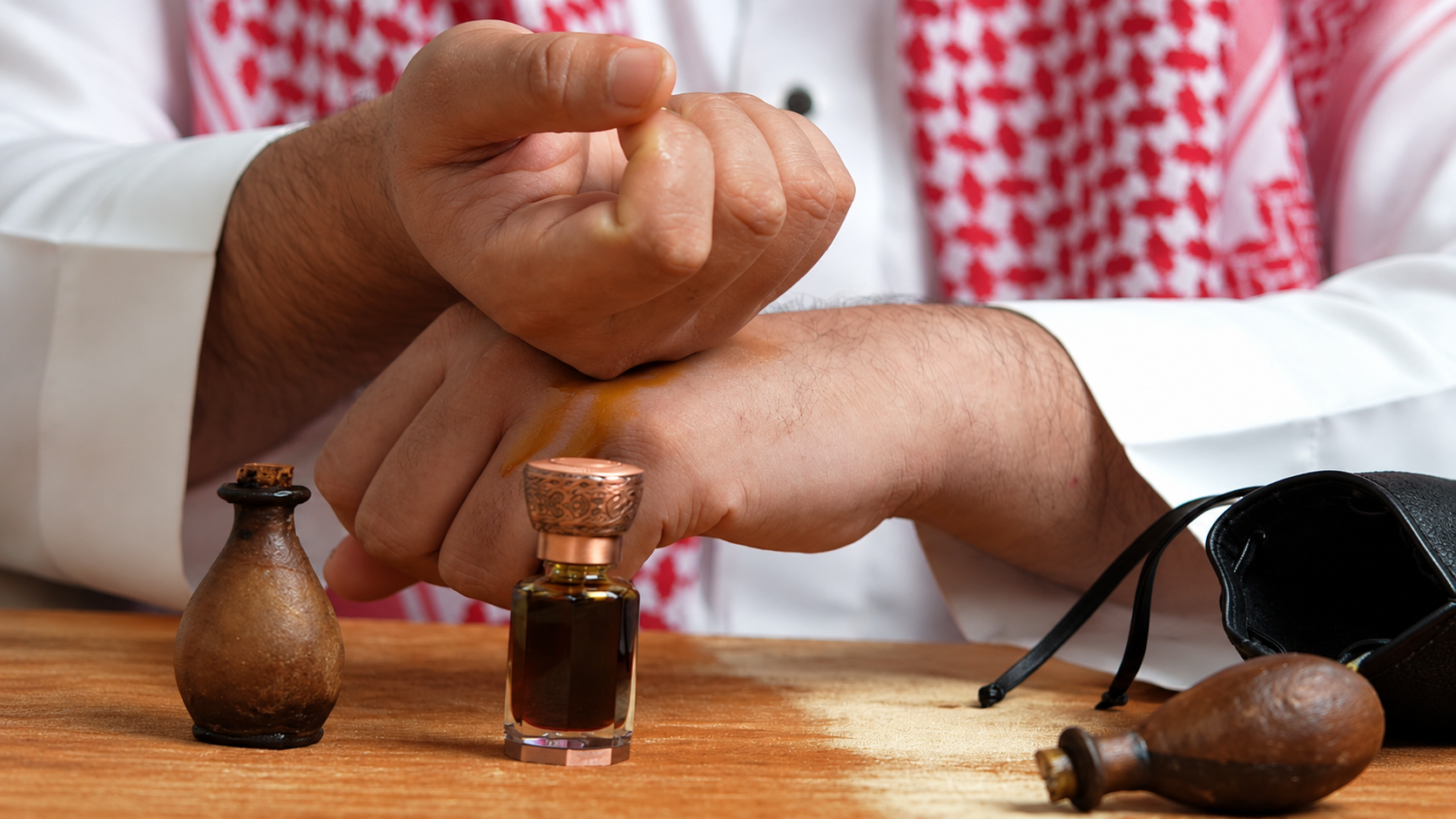
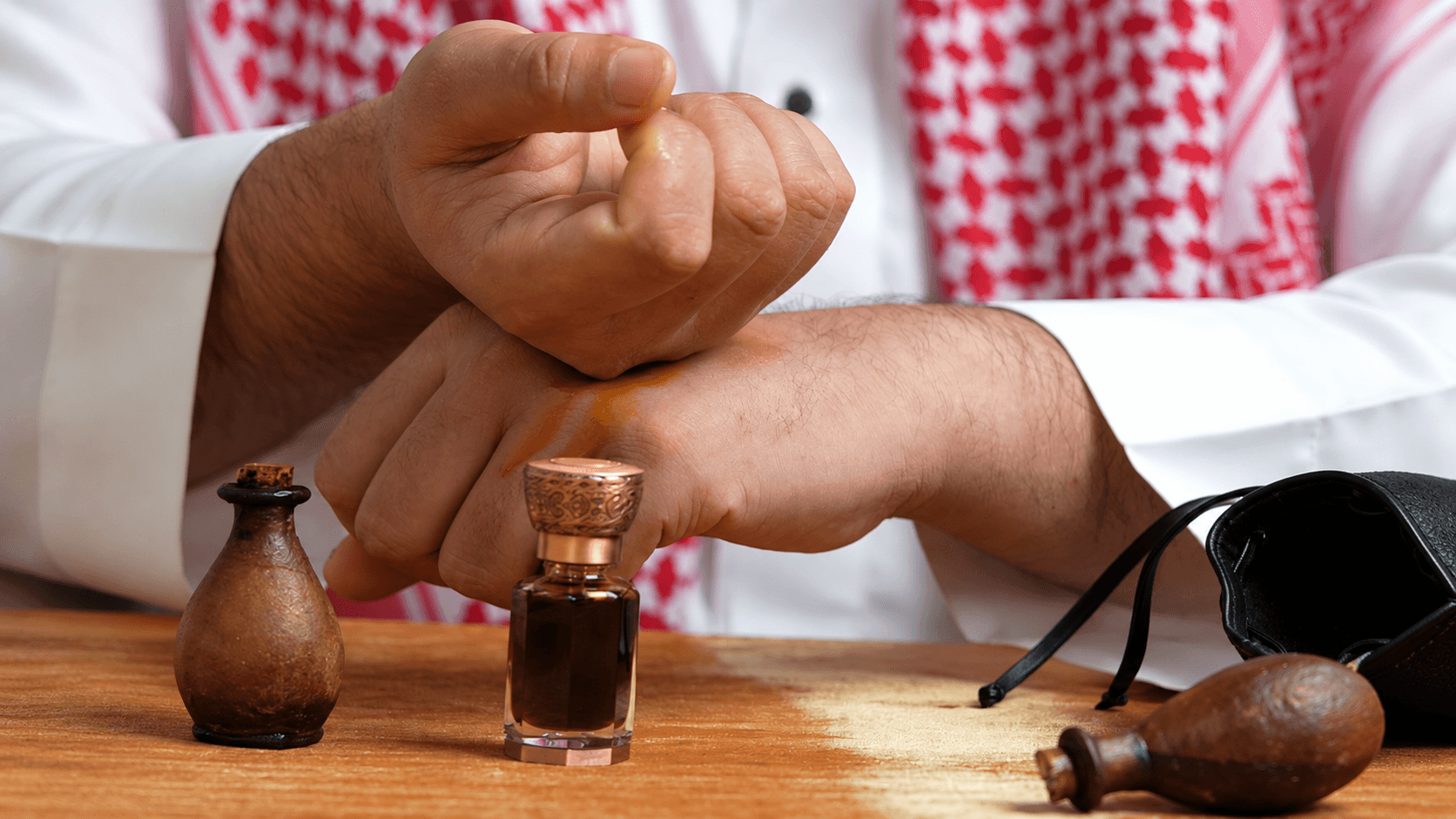
AROWA attar being tested on two wrists
What makes the same attar smell different?
For you to smell an attar, its aromatic molecules must leave the skin and enter the air. Skin is not the same on every person. It may be dry, well hydrated, smooth, rough, warm, or cool. Those differences can affect how quickly individual fragrance materials evaporate.
Natural body odor and products already on the skin add another layer. Soap, lotion, deodorant, or an earlier fragrance can mix with the attar. Your nose then completes the experience. A note that stands out clearly to you may be much less noticeable to someone else.
A small 2025 study in the International Journal of Cosmetic Science measured fragrance evaporation on the skin of ten volunteers. Molecules from the same fragrance mixture evaporated at different rates depending on the wearer and certain skin properties. The study used an alcohol-based Eau de Toilette, so its findings should not be applied directly to every oil-based attar. It still offers useful evidence that skin is not a neutral surface. Read the study
What does Skin Chemistry actually mean?
Skin Chemistry is not the name of a single chemical. In fragrance discussions, it is a convenient label for several skin characteristics. These include moisture level, surface texture, temperature, natural oil, sweat, and a person's normal body odor.
Your own skin does not remain in one condition throughout the year. It may become drier in winter, warmer and sweatier in summer, or coated by a new skincare product. An attar can therefore feel different on the same person in a different season or setting.
Is skin pH the main reason?
Skin pH is often blamed whenever a fragrance smells different. The evidence is not that simple. pH may matter in some cases, but it is not proven to be the only or consistently dominant factor. In the small 2025 study, hydration, water loss, and skin roughness showed stronger relationships with fragrance evaporation. pH and sebum were not leading contributors in that model.
It is more useful to consider the formula, the current condition of the skin, and the wearing environment together.
What about natural body odor?
Fresh sweat is not always strongly scented. Skin microbes can break down components of sweat and other secretions, creating body odor. This is more noticeable in warm, damp areas such as the underarms. The effect is usually milder on a clean wrist or inner forearm, but a person's natural scent can still shape the overall impression. Read the review on skin microbiome and body odor
Dry Skin and Oily Skin
You may have heard that fragrance always fades quickly on Dry Skin and lasts longer on Oily Skin. That can happen, but it is not a fixed rule. Moisture matters, yet the fragrance materials, amount applied, body temperature, and weather matter as well.
On Dry Skin
Some lighter fragrance molecules may leave very dry or rough skin more quickly. The opening may seem to soften sooner. If your skin is dry, apply an unscented moisturizer, let it absorb, and then test the attar. A scented lotion can interfere with the result.
On Oily Skin
Natural skin oil may help hold some fragrance materials near the surface. On some people, this makes the scent feel fuller or slower to fade. It is still not a guarantee. Oil-based attars already contain a carrier oil, so advice written for alcohol-based spray perfumes does not always translate directly.
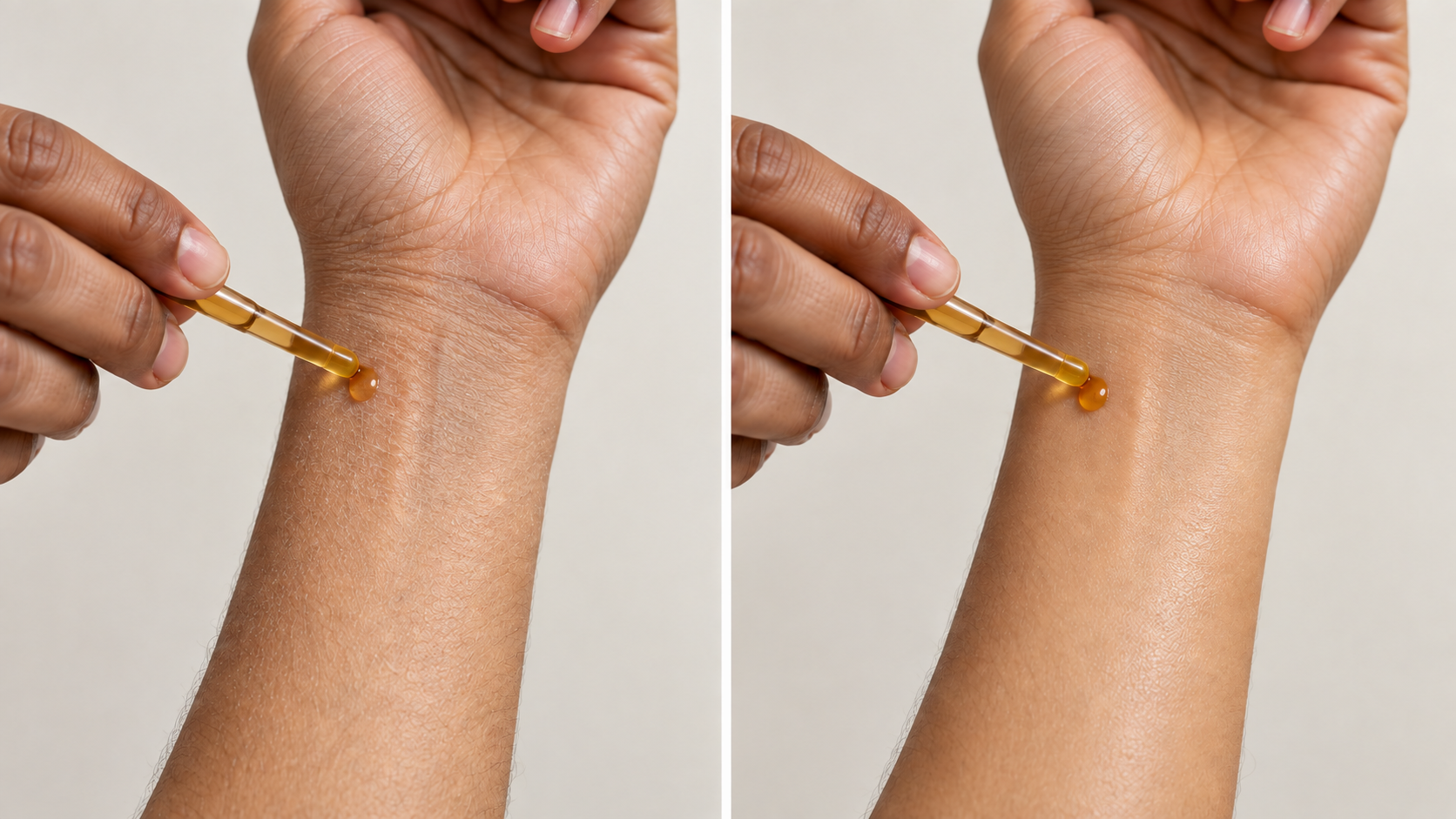
A comparison of attar testing on dry and moisturized skin
How does body heat affect an attar?
Aromatic molecules must rise from the skin into the air before you can smell them. Warmth helps many lighter molecules evaporate more quickly. On warm skin, an attar may feel stronger or more diffusive at first. If the lighter notes fade sooner, deeper notes may also appear earlier.
This is why people often apply attar to the wrists, sides of the neck, behind the ears, or inside the elbows. Pulse points are not magical. They are simply warm, exposed areas where scent can lift from the skin.
What do sweat and weather change?
Bangladesh's hot, humid weather can raise body temperature and increase sweating. A deep or powerful attar may feel stronger in the opening. Heavy sweating or repeatedly wiping the skin may also make the scent fade sooner.
An attar tested in an air-conditioned room may not feel identical outdoors in the heat. When possible, wear it once in the setting where you expect to use it. For a clear test, choose a clean, dry wrist rather than the underarm or another area where you sweat heavily.
Why does it smell different from the bottle, strip, skin, and clothes?
Each testing surface holds and releases fragrance differently.
Test surface | What it tells you | What it cannot tell you |
|---|---|---|
Bottle | A concentrated first impression | How it develops or lasts on your skin |
Smelling strip | The general character without body odor | The effect of skin moisture, warmth, and natural oil |
Skin | Development, diffusion, and wear on you | Whether another person will get the same result |
Clothes | Fabric longevity and a steadier version of the scent | The effect of Skin Chemistry |
The scent at the bottle opening is concentrated in a small space, so it can feel unusually intense. A smelling strip is useful for an early comparison. Fabric often keeps the scent more stable because it does not have skin heat, sweat, or natural oil. If you are choosing an attar for yourself, the final test should be on your skin.
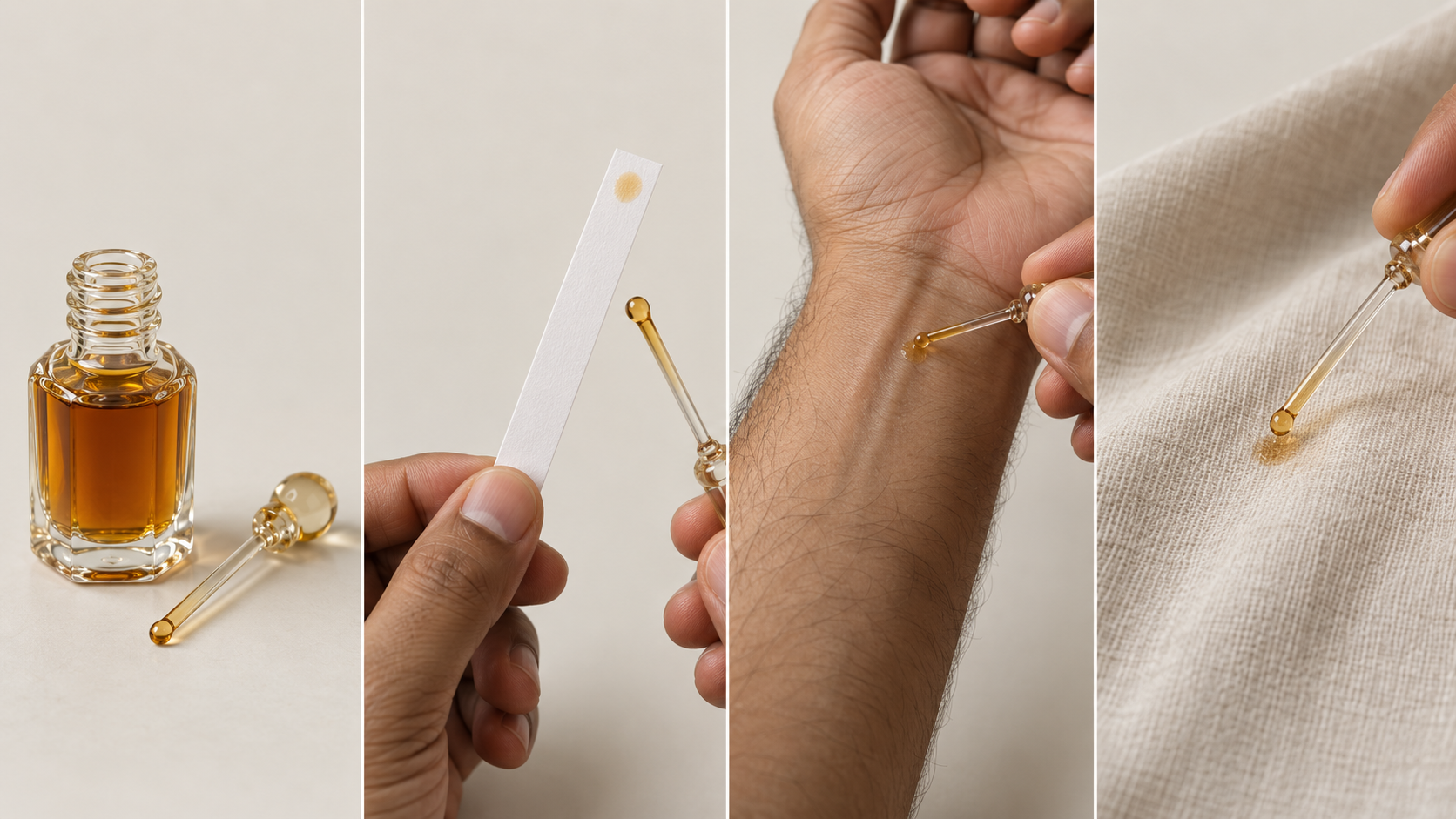
Differences between testing attar from the bottle, on a smelling strip, skin, and clothes
The right way to test an attar
Start with clean skin
Use the wrist or inner forearm. Make sure there is no perfume, scented lotion, deodorant, or another attar on that spot. Do not test a new product on cut, irritated, or highly sensitive skin.
Apply a small amount
Oil-based attars can be concentrated. A small amount is enough for the first test. Applying too much can make the scent feel harsher than it normally would and makes comparison difficult.
Do not rub
Rubbing your wrists spreads the oil over a wider area and creates extra warmth. Leave the attar undisturbed so you can compare each test under similar conditions.
Give it time
Smell the opening, then check again after 15 to 30 minutes. If possible, return after two hours and once more after four to six hours. A pleasant opening does not guarantee that you will enjoy the dry-down.
Rest your nose
Testing more than two or three attars at once can make the scents blur together. Use a separate area for each one. If the answer is not clear in one day, try again later.
Should you buy an attar because someone else loves it?
Reviews and recommendations are useful. They can tell you whether an attar leans sweet, smoky, floral, or woody. They cannot guarantee that you will smell or enjoy it in the same way.
People also differ in how they detect odor molecules. Genetic variation in odor receptors can make a material smell strong to one person and weak or different to another. Read the study on genetic variation in odor perception
Memory changes preference too. A scent may remind you of a person, a place, or a comforting moment, while another wearer has no such connection. The Perfume Society notes that both genetics and life experience play a part in fragrance preference.
Use another person's opinion as guidance. Let your own nose and skin make the decision.
Why is the AROWA Testing Bottle useful?
An online description can help you imagine a fragrance, but it cannot show exactly how that attar will feel on your skin. AROWA includes a separate Testing Bottle with every attar order to reduce that uncertainty.
At delivery, apply a small amount from the Testing Bottle to clean skin. If you like the scent, keep the main bottle. If it is not for you, return the main bottle unopened, with its seal intact and in the original packaging. The Testing Bottle is yours to keep. The delivery charge is non-refundable. See the full terms in the AROWA Return Policy.
There is one practical limit. A few minutes at the door cannot reveal the full dry-down or several hours of longevity. The test helps you judge the opening and check for any immediate discomfort on your skin.
The same attar will not always diffuse, last, or feel identical on every person. Skin moisture, warmth, sweat, personal-care products, and scent perception can all play a part.
There is no need to explain every difference with mysterious body chemistry. The formula, amount applied, and wearing environment matter too. A recommendation can help you begin, but repeated testing on your own skin gives you the clearest answer.