A fragrance settles on your skin with the warmth of vanilla, but it is not simply creamy or sugary. Underneath, you notice dry hay, toasted almond, soft tobacco and a light powdery texture. That familiar yet hard-to-name smell may be tonka bean.
Tonka bean is often described as an alternative to vanilla. The comparison is useful, but incomplete. Both materials can bring warmth and sweetness to a fragrance. Tonka is usually drier, nuttier and more aromatic. Vanilla can feel round and creamy, while tonka adds hints of hay, almond, tobacco and, in some extracts, cocoa.
This guide explains what tonka bean is, what it smells like, what coumarin does, how tonka bean differs from vanilla, and why perfumers use it in attar and perfume.
What Is Tonka Bean?
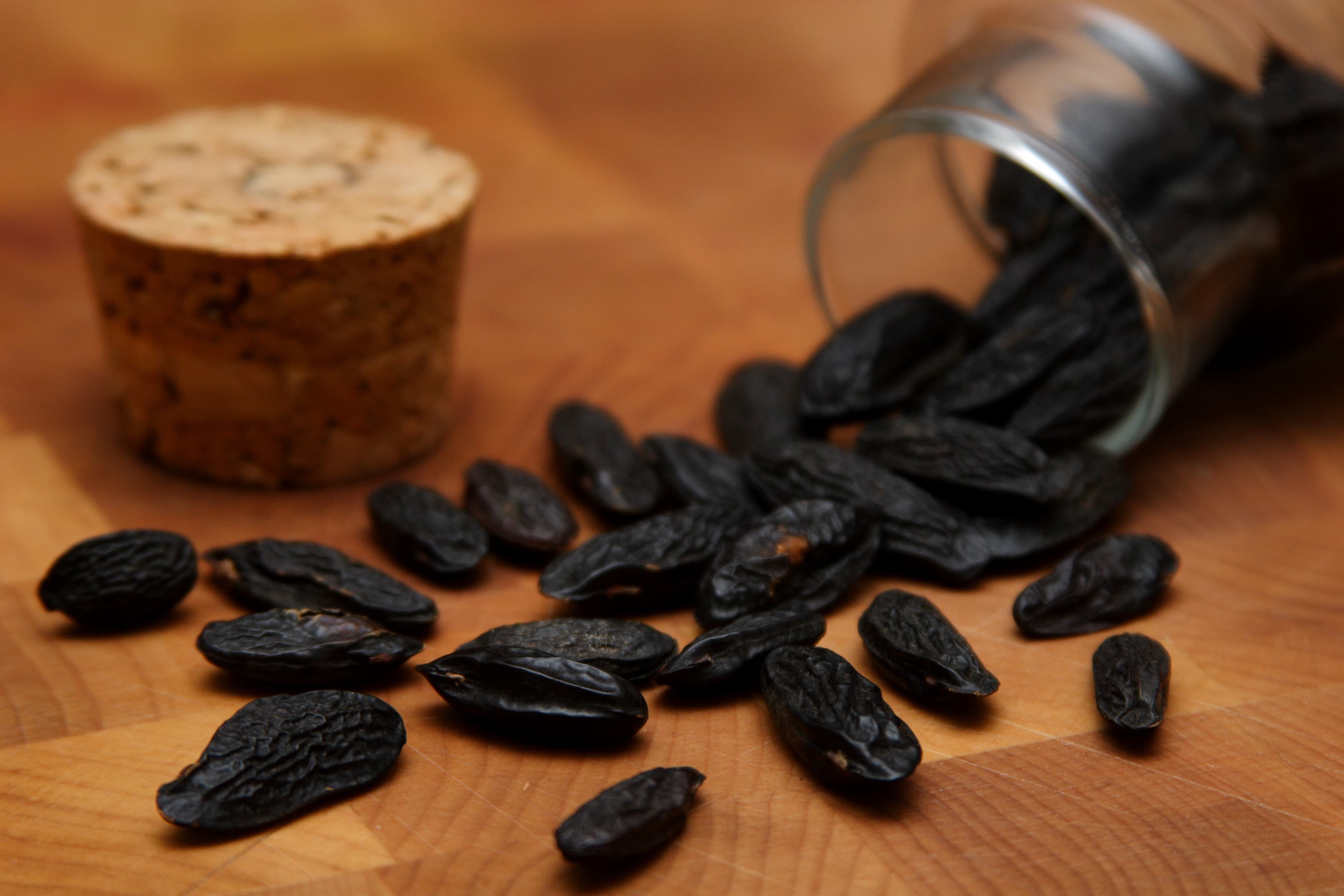
Tonka bean is the fragrant seed of the Dipteryx odorata tree. The tree belongs to the Fabaceae, or pea, family and grows naturally in Central America and the northern parts of South America. Tonka used in perfumery is commonly sourced from Brazil and Venezuela. In Brazil, the tree and its seed are also known as Cumaru.
The tree can grow around 20 to 30 metres tall. Its fruit resembles a large almond and usually contains one seed. Once dried, that seed becomes dark, hard and deeply wrinkled. It does not look particularly fragrant from the outside. The surprise is inside.
Despite its name and botanical family, tonka bean is a seed rather than an everyday culinary bean. Perfumers work with extracts made from the seed, especially Tonka Bean Absolute, as well as coumarin, the aroma molecule most closely associated with tonka.
How Does the Seed Become a Fragrance Material?
Ripe fruits are collected after falling to the ground. The hard shells are broken, and the seeds are dried first in the shade and then in the sun. Processing methods vary by producer and region. In Givaudan's Brazilian sourcing process, the dried beans are soaked in strong alcohol for about 24 hours, then dried for another five or six days.
During curing and drying, a fine white frost may appear on the dark surface of the beans. These are coumarin-rich crystals, closely linked to tonka bean's recognisable smell.
Producers can then use solvent extraction to make a concrete and refine it further into Tonka Bean Absolute. IFF describes its traditional Absolute as a material obtained through solvent extraction followed by purification with ethyl alcohol.
There is also Tonka Bean CO₂ Extract. Supercritical carbon dioxide draws out a somewhat different expression of the seed. IFF describes its CO₂ material through roasted almond, sun-dried hay and soft cocoa facets.
One distinction matters here. A fragrance note labelled “Tonka Bean” does not prove that natural Tonka Bean Absolute is present in the bottle. The smell may come from natural extract, isolated coumarin, synthetic coumarin, a constructed tonka accord, or a blend of several materials.
What Does Tonka Bean Smell Like?
Tonka bean does not have one fixed smell. A raw bean, an Absolute, a CO₂ extract, isolated coumarin and a perfumer's tonka accord can each smell slightly different. Still, a few facets return again and again:
Warm, restrained sweetness
Creamy hints of vanilla or praline
Toasted almond or marzipan
Dry hay and freshly cut grass
Soft tobacco and dry wood
A light powdery, spicy or caramel-like texture
Occasional touches of cocoa, honey or smoke
IFF describes its Tonka Bean Absolute as warm, powdery and sweet-almond-like, with hay and tobacco facets over creamy vanilla-praline undertones. Givaudan describes powdery almond and vanilla notes, balanced by dry wood and tobacco. Read together, those profiles make one point very clear: tonka bean is much more than a sweet vanilla substitute.
The surrounding notes decide which side of tonka comes forward. Beside vanilla and benzoin, it can feel creamy and gourmand. Paired with lavender, its dry, aromatic and powdery character becomes clearer. Tobacco, patchouli and woods pull out its darker, slightly smoky side.
What Is Coumarin?
Coumarin is the aroma compound most closely connected to tonka bean. Its smell can suggest dried hay, sweet almond, vanilla-like warmth and powder. Tonka is a rich natural source, but coumarin also occurs in sweet clover, cassia and several other plants.
Coumarin was first isolated from tonka beans in 1820. Laboratory synthesis followed in 1868. In the 1880s, Houbigant's Fougère Royale used a structure built around lavender, oakmoss and coumarin, helping establish the modern fougère fragrance family. Traces of that structure still appear in classic aromatic and barbershop-style fragrances.
Tonka bean and coumarin are not the same thing. Tonka bean is a complete natural material containing coumarin alongside other aromatic components. Coumarin is one recognisable molecule within that material. Isolated coumarin brings the sweet, powdery and hay-like effect into focus, but it does not reproduce every woody, spicy and balsamic shade found in a natural Absolute.
Tonka Bean, Tonka Absolute, Coumarin and Tonka Accord
Name | What it is | Typical smell | Common role |
|---|---|---|---|
Tonka Bean | The dried seed of Dipteryx odorata | Vanilla, almond, hay, tobacco and spice | Source material used in perfumery |
Tonka Bean Absolute | A solvent-extracted and refined aromatic material | Warm, powdery, balsamic, woody and vanilla-praline-like | A rich base material in fine fragrance and attar |
Tonka Bean CO₂ Extract | An extract made using supercritical CO₂ | Roasted almond, dry hay, cocoa and gourmand warmth | A different natural interpretation of the seed |
Coumarin | A specific aroma molecule associated with tonka | Hay-like, sweet, powdery and almond-vanilla-like | Used in fougère, gourmand, tobacco and warm bases |
Tonka Accord | A perfumer's reconstruction of the smell of tonka | Creamy, sweet, powdery or dark, depending on the formula | Creates or changes the impression of tonka |
This is why a fragrance note list should not be read as a formula. Notes help a customer imagine the scent, but they do not reveal exactly which raw materials were used or in what quantity.
Tonka Bean vs Vanilla: What Is the Difference?
The confusion exists for a good reason. Tonka bean and vanilla can both feel warm, soft and sweet. They also appear together in many perfumes. The difference is not simply how sweet they are. It is the character of that sweetness.
Feature | Tonka Bean | Vanilla |
|---|---|---|
Source | Seed of the Dipteryx odorata tree | Cured pod of a Vanilla orchid |
Associated molecule | Coumarin | Vanillin |
General character | Warm, dry, nutty, powdery and aromatic | Warm, rounded, creamy and balsamic |
Typical facets | Hay, almond, tobacco, praline and soft spice | Cream, sweet pod, wood, balsam and sometimes smoke |
Style of sweetness | Toasted, restrained and relatively dry | Round, soft and often dessert-like |
Role in fragrance | Adds dry warmth, texture and connection between notes | Adds creaminess, softness and rich sweetness |
Natural vanilla is not limited to cake or ice cream. Depending on the material and processing, it may smell woody, smoky, balsamic or spicy. Tonka is not automatically a sweet gourmand note either. It can become aromatic beside lavender and oakmoss, or distinctly dry beside cedar and tobacco.
Here is a simple picture. Vanilla can feel like soft cream. Tonka is closer to the toasted almond crust beneath it, with a trace of dry hay and tobacco. It is an illustration, not a formula, but it makes the difference easier to smell.
What Does Tonka Bean Do in Attar and Perfume?
Tonka bean usually sits toward the base of a fragrance. It becomes clearer as the top notes fade and brings warmth into the dry-down. Sweetness is only one part of its job.
It softens sharper notes
Cedar, leather, tobacco and dry spices can feel severe at first. Tonka's almond-like warmth and powdery texture can soften those edges without erasing the character of the other materials.
It gives sweetness a dry contrast
Vanilla, caramel and praline can become heavy or syrupy when stacked together. Tonka adds hay, tobacco and toasted nut facets, creating a drier space inside that sweetness. This is one reason it works so well in gourmand compositions.
It connects the heart to the base
Rose, jasmine, citrus and spices often lead into wood, amber and musk. Tonka can make that transition feel more natural. The notes stop reading as separate pieces and begin to feel like one fragrance.
It gives the dry-down more body
Tonka Bean Absolute and coumarin can be tenacious in the base. They help the dry-down retain a warm presence rather than becoming thin too quickly. That does not mean every perfume containing tonka will last all day. Concentration, the complete formula, skin, weather and application amount all affect longevity.
Which Fragrance Families Use Tonka Bean?
Fougère
Lavender, oakmoss and coumarin form the familiar core of a classic fougère. Tonka or coumarin does not smell like dessert here. It contributes dry hay, powder and aromatic warmth. Many classic men's fragrances and barbershop scents use some form of this effect.
Gourmand
Beside vanilla, coffee, cocoa, caramel, praline, cinnamon or dates, tonka brings toasted, nutty depth. The fragrance feels more textured and less like a flat layer of sugar.
Amber
In a warm resinous base of labdanum, benzoin and vanilla, tonka can add almond, powder and a light tobacco-like shade. Depending on the formula, it can make an amber accord creamier or darker.
Tobacco and Leather
Tonka is not tobacco leaf. Yet coumarin has a long history in tobacco accords, so the two smells have become closely associated. With leather, tonka can soften the sharpness and create a warmer, smoother base.
Woody and Spicy Fragrances
Tonka works easily with sandalwood, cedar, patchouli, oud, cinnamon, nutmeg and saffron. It adds body and warmth while allowing the wood or spice to remain recognisable.
Rose and Other Floral Notes
Tonka does not always make rose sweeter. With patchouli, pepper or musk, it can give the floral heart a warm, nutty and velvety finish. The contrast between a soft floral note and a deeper base is often more interesting than sweetness alone.
What Notes Pair Well with Tonka Bean?
Vanilla and Benzoin: A creamy, balsamic and warm gourmand base
Lavender and Oakmoss: A classic aromatic fougère character
Tobacco, Leather and Coffee: Dark, dry and roasted warmth
Sandalwood, Cedar, Patchouli and Oud: Soft sweetness beneath woody depth
Rose, Jasmine and Iris: Powdery warmth under floral notes
Bergamot, Mandarin and Lemon: A clean transition from a bright opening to a warm base
Cinnamon, Nutmeg and Saffron: Spiced sweetness with a cooler-weather feel
Tonka's character changes with its partners. That is the interesting part. It may be easy to describe on its own, but it becomes most useful inside a blend.
Is Tonka Bean Only Used in Men's Fragrances?
No. Its history in fougère and barbershop fragrances has led many people to think of tonka as masculine. It also appears widely in gourmands, ambers, rose fragrances, powdery florals and unisex compositions.
Tonka bean has no gender by itself. With lavender, oakmoss and dry woods, it may feel traditionally masculine. Add vanilla, praline, rose or soft powdery notes, and the profile can become sweeter, softer or clearly unisex. The finished composition decides how the fragrance feels.
Is Tonka Bean Better for Summer or Winter?
Tonka-heavy fragrances often feel most comfortable in cool weather, during the evening or in winter. Their warm, powdery, vanilla-like and tobacco-like base can become dense in heat. But tonka has no fixed season.
A small amount of tonka beside bergamot, mandarin, green notes or light florals can work well in warm weather. In Bangladesh's heat and humidity, start with one drop when wearing a sweet, tonka-heavy attar. The same fragrance may feel softer and smoother in winter or in an air-conditioned room. For more detail, read the guide to choosing attar for summer and winter.
How Can You Recognise Tonka Bean in an Attar?
Do not judge from the bottle or the first minute alone. Tonka usually becomes clearer in the dry-down. Apply the fragrance to skin or a testing strip, wait for one or two hours, then look for a few signs:
Vanilla-like warmth with dry hay or powder underneath
A toasted almond, marzipan or praline facet inside the sweetness
Soft tobacco, wood or a faint smoky shadow toward the end
Floral, spicy or citrus heart notes melting into a smooth warm base
These clues suggest tonka, but they do not prove it. Benzoin, heliotrope, vanilla, tobacco accord, almond accord and other aroma materials can produce similar impressions. Check the brand's official note list when you want confirmation.
Natural Tonka, Synthetic Coumarin and “Organic Attar” Claims
Natural tonka bean is plant-derived, but a Tonka Bean note does not automatically mean natural Absolute was used. Synthetic coumarin is common in modern perfumery because it offers consistency and lets the perfumer control a specific effect. Natural and synthetic materials should not be judged as good or bad from the label alone. Quality depends on the material, formulation and safe use.
Terms such as “premium attar,” “natural attar” and “organic attar” do not prove purity, botanical origin or organic certification by themselves. A brand claiming natural Tonka Bean Absolute or certified organic material should have reliable information supporting that claim. Confusing a fragrance note with an ingredient is where most misunderstandings begin.
Buying a Tonka Bean Attar in Bangladesh
Searches such as top-selling attar in Bangladesh, best-selling attar in Bangladesh, most popular attars in Bangladesh, Bangladesh top-selling attar, premium attar in Bangladesh and natural attar in Bangladesh bring up many lists. When choosing a Tonka Bean attar, the official fragrance notes are more useful than a sales label.
First, check where tonka appears. Is it a supporting base note or the main theme? Then read the notes around it. Vanilla, benzoin and praline usually point toward a creamier gourmand profile. Tobacco, leather, patchouli or oud may make it drier and deeper. Rose, musk or citrus can place tonka in a softer supporting role.
When buying attar online in Bangladesh, look for:
A clear breakdown of top, heart and base notes
Honest wording about natural materials, accords and synthetic molecules
A testing bottle or sample that lets you check the dry-down on skin
Realistic longevity information
A clear return policy that keeps the main bottle sealed
A claim such as “best-selling” or “most popular” needs real sales data. A list or advertisement alone cannot prove that one product is the best attar in Bangladesh. What remains on your skin after several hours is a much better guide.
Tonka Bean Attars from AROWA: Which One Suits You?
Tonka Bean appears in two different profiles in AROWA's current collection. It gives Moroccan Rose a warm finish beneath the rose and provides a deep gourmand foundation in Khamrah.
Moroccan Rose
Rose stays at the centre, but the dry-down is not simple. Bergamot and pepper open the fragrance, rose fills the heart, and patchouli, Tonka Bean and musk form the base. Tonka adds a warm, velvety and lightly nutty softness beneath the rose. This profile suits someone who enjoys rose but wants more depth at the end.
Khamrah
Khamrah shows the gourmand side of tonka. Cinnamon, nutmeg and bergamot open the fragrance, followed by a dates accord, praline, lily of the valley and tuberose. Roasted Tonka Bean, benzoin, myrrh, vanilla, amber wood and Akigalawood create a warm, creamy, dessert-like dry-down. This profile will make more sense to someone who enjoys sweet, spicy fragrances in cooler weather.
A written description gives you a map, not the full smell. Test from the testing bottle and wait for the dry-down before deciding. Tonka may reveal its clearest character several hours after application.
Are Tonka Bean and Coumarin Safe in Perfume?
Concentrated Tonka Bean Absolute and coumarin are raw perfumery materials, not finished perfumes. They should not be applied directly to the skin. A formulator must work from the material specification, supplier certificate and the relevant IFRA Standard. Coumarin limits can vary by product category, so one percentage should not be treated as a universal limit for every perfume and cosmetic product.
Follow the brand's directions when using a finished attar or perfume. If your skin is sensitive, test a small area first. Stop using the product if itching, burning or irritation appears. Food regulations for tonka and safety standards for skin fragrance are separate matters and should not be treated as the same rule.
Frequently Asked Questions About Tonka Bean
Is Tonka Bean the Same as Vanilla?
No. Tonka bean is the seed of the Dipteryx odorata tree, while vanilla comes from the cured pod of a Vanilla orchid. Coumarin is closely associated with tonka, while vanillin is closely associated with vanilla. Tonka is usually drier, nuttier, more hay-like and more tobacco-like.
Are Tonka Bean and Coumarin the Same Thing?
No. Tonka bean is a complete natural material. Coumarin is one of its best-known aroma compounds. Natural Tonka Bean Absolute can smell more woody, spicy, balsamic and layered than isolated coumarin.
Is Tonka Bean a Base Note?
It is usually used as a base note and becomes most noticeable in the dry-down. Depending on the formula and concentration, its powdery or aromatic side may begin to appear in the heart.
Is Tonka Bean Very Sweet?
Not always. It can become gourmand beside vanilla, caramel or praline. With lavender, oakmoss, tobacco or cedar, it can smell much drier, more aromatic and restrained.
Does Tonka Bean Make an Attar Long-Lasting?
Tonka and coumarin can stay noticeable in the base, but a note list cannot predict the full longevity of an attar. Concentration, carrier, formula, skin, clothing, weather and application amount all matter.
Can Both Men and Women Wear Tonka Bean?
Yes. Tonka bean is not gender-specific. The surrounding notes make the finished fragrance feel masculine, feminine or unisex.
Can Tonka Bean Be Worn in Hot Weather?
Yes, but a sweet tonka-heavy fragrance may feel dense in Bangladesh's heat. Tonka is easier to wear in warm weather when paired with citrus, green notes, musk or a light rose. Start with a small amount.
Is Tonka Bean a Natural Ingredient?
The bean and its Absolute are natural materials. A “Tonka Bean note,” however, may come from natural extract, synthetic coumarin or a constructed accord. The note list alone cannot prove which one was used.
Is Tonka Bean Halal or Vegan?
Tonka bean itself is plant-derived and is not an animal material. The Halal or vegan status of a finished attar depends on the complete formula, carrier, processing aids and reliable information from the brand.
A Distinct Scent Hiding Behind Vanilla
Vanilla is an easy place to begin when describing tonka bean, but it only tells half the story. Dry hay, toasted almond, soft tobacco, powder and a little wood are what give tonka its own identity.
The next time you test a warm, sweet attar, do not decide within the first five minutes. Wait for the dry-down. If the creamy sweetness develops a dry, nutty and lightly tobacco-like edge, you may have found the part of the fragrance where tonka bean is quietly doing its best work.