Looking for quality Amber attar in Bangladesh, pure Amber attar or original Amber attar? First, one common misconception needs to be cleared up: in perfumery, Amber is not the name of a single ingredient obtained from a flower, plant or animal.
One Amber attar may smell soft, sweet and warm, while another feels drier, woodier and more heavily spiced. How can fragrances with the same name smell so different?
The answer lies in the Amber Accord. In perfumery, an accord is a distinctive scent created by combining several ingredients. A familiar Amber Accord may use Labdanum, Benzoin, Vanilla or Vanillin. Modern ambery materials, however, can bring woody and musky qualities forward rather than sweetness.
The names of jewellery Amber and sea-borne Ambergris are also connected to this subject. Before trying to understand what Amber smells like, you need to know which kind of Amber is being discussed. Once that distinction is clear, fragrance descriptions become easier to understand and choosing an attar becomes more straightforward.
What Is the Difference Between Amber, Ambergris and an Amber Accord?
Keeping these three terms separate will make the rest of the subject easier to follow. One comes from ancient tree resin, another is an animal-derived substance, and the third is a concept used to create fragrance.
Jewellery Amber
The golden, yellow or orange Amber used in jewellery and decorative objects comes from ancient tree resin. Over a long geological process, that resin became fossilised. Small insects or fragments of plants can sometimes be found trapped inside it.
Resin is a sticky substance produced by a plant or tree. Amber is often described casually as a stone, but it did not form in the same way as a mineral stone. The Gemological Institute of America, or GIA, describes it as an organic gem.
When Amber appears in the notes of an attar, however, it does not necessarily mean that this jewellery material is inside the bottle. To understand the identity of Amber in a fragrance, you need to consider its formula and scent description.
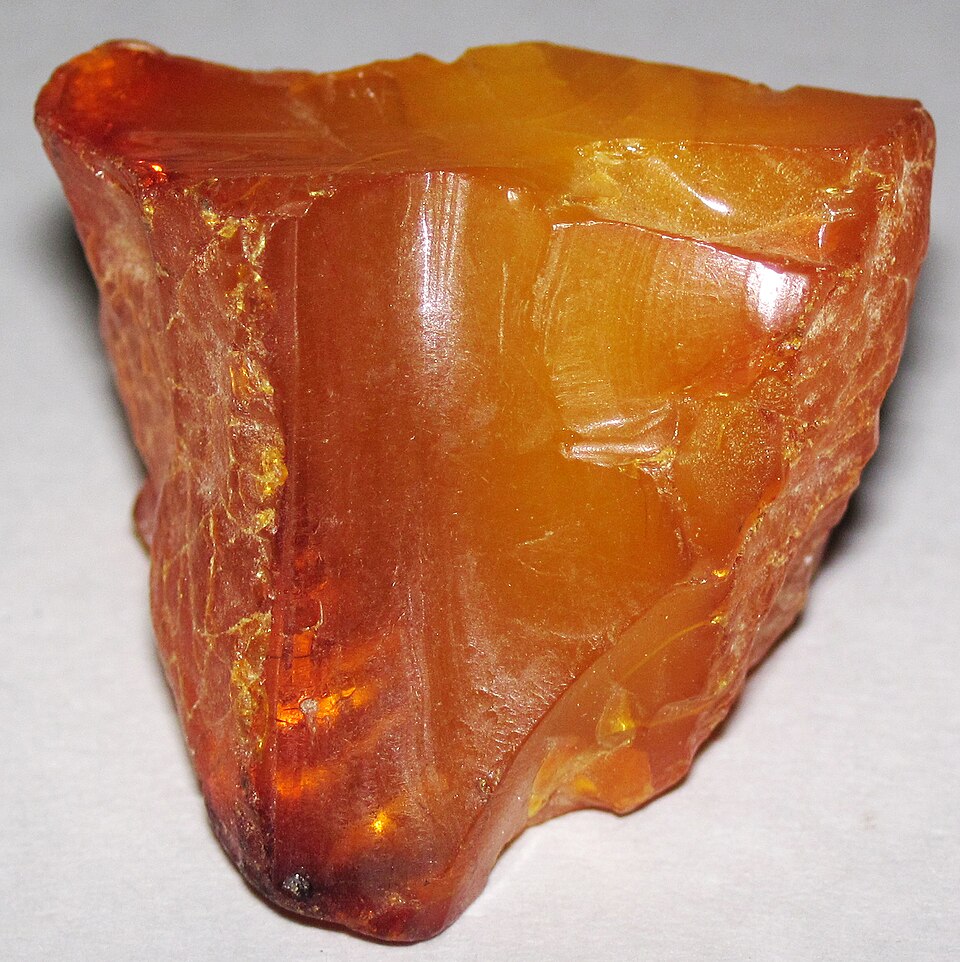
Yellow and orange fossilized amber
Fossilized amber is ancient tree resin. It is not the same as an Amber note in perfumery.
Ambergris
Ambergris is a rare substance formed in the digestive system of the sperm whale. It may float in the sea or eventually wash ashore. This natural material has a long history of use in perfumery.
It is often called “whale vomit”, but that phrase does not explain the full process. According to the Natural History Museum, hard, indigestible parts of squid can, in rare cases, accumulate in the whale's intestine and contribute to the formation of a mass of Ambergris over time. There is still some uncertainty about exactly how it leaves the whale's body.
Fresh Ambergris can smell strong and unpleasant. As it dries and remains exposed to the environment for a long time, its colour and scent change. Mature Ambergris is sometimes described as musky. Its origin alone, therefore, does not tell you what it will smell like when used in a fragrance.
Amber Accord
When several fragrance materials are combined to create a distinct scent character, the result is called an accord. An Amber Accord is one such composition. Its familiar form is warm, sweet, slightly powdery and deep with a resinous quality.
The aim is not necessarily to identify each ingredient separately. What matters is how the blend smells as a whole. Changing the proportions of the same materials can produce a different result. A perfumer may also introduce other ingredients to make an Amber Accord spicier, drier, softer or darker.
Name | What it actually is | What it means in perfumery |
|---|---|---|
Jewellery Amber | Fossilised tree resin | An Amber note does not necessarily mean this material is present |
Ambergris | A substance formed in the digestive system of the sperm whale | A specific animal-derived material |
Amber Accord | A scent created by combining several materials | There is no single fixed formula |
How Is Amber Attar Made, and Where Does Its Scent Come From?
A simple way to begin understanding classic Amber is to learn about Labdanum, Benzoin and Vanilla. These materials are used in many Amber compositions, but they should not be treated as a compulsory recipe for every Amber fragrance.
Labdanum: Resinous Depth
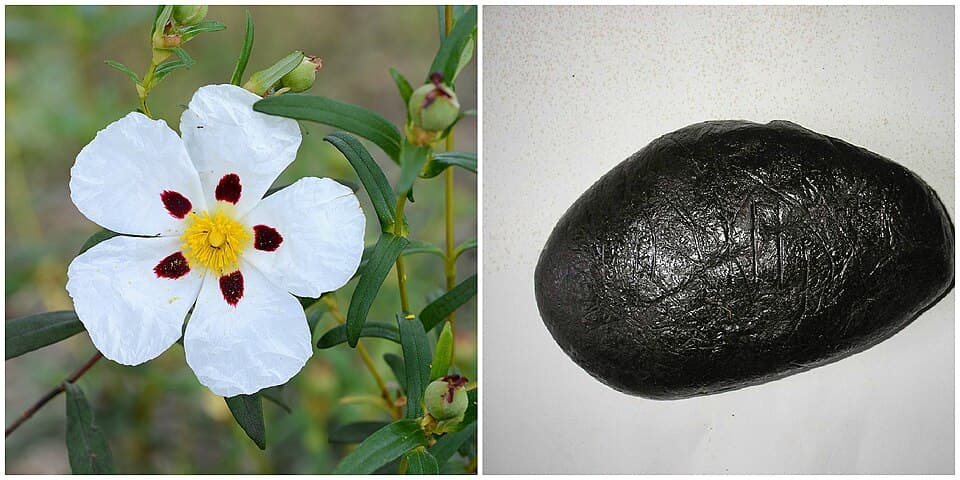
Labdanum is obtained from the resin of plants known as Cistus or rockrose. Its extracts can have a warm, dense, resinous character, sometimes with leathery or gently animalic facets. It can give Amber depth rather than leaving the composition simply sweet.
Here, animalic is a description of scent. An animalic quality does not automatically mean that a fragrance material came from an animal. Plant-derived Labdanum can create a similar impression.
Processing can also change the character of the material. For example, Givaudan describes dry amber, woody and mineral facets in one of its processed Labdanum ingredients. The idea that Labdanum is only dense and sweet is therefore incomplete.
Benzoin: Soft Balsamic Sweetness
Benzoin is an aromatic resin obtained from Styrax trees. Its extracts can offer Vanilla-like sweetness, warmth and a gentle spicy touch. In an Amber composition, it can help create a soft, rounded body.
The word balsamic is useful in fragrance descriptions. Put simply, it refers to a warm, soft and slightly sweet scent with a resinous quality. It should not be confused with the sour smell of balsamic vinegar used in food.
There are differences within Benzoin too. According to Firmenich's Benzoin Siam ingredient sheet, Benzoin Siam has warm, balsamic and Vanilla-like facets. Its Benzoin Sumatra ingredient sheet describes a warm profile that is comparatively spicier, more cinnamic and powdery. Even materials of the same general type can play different roles in a composition when their origins differ.
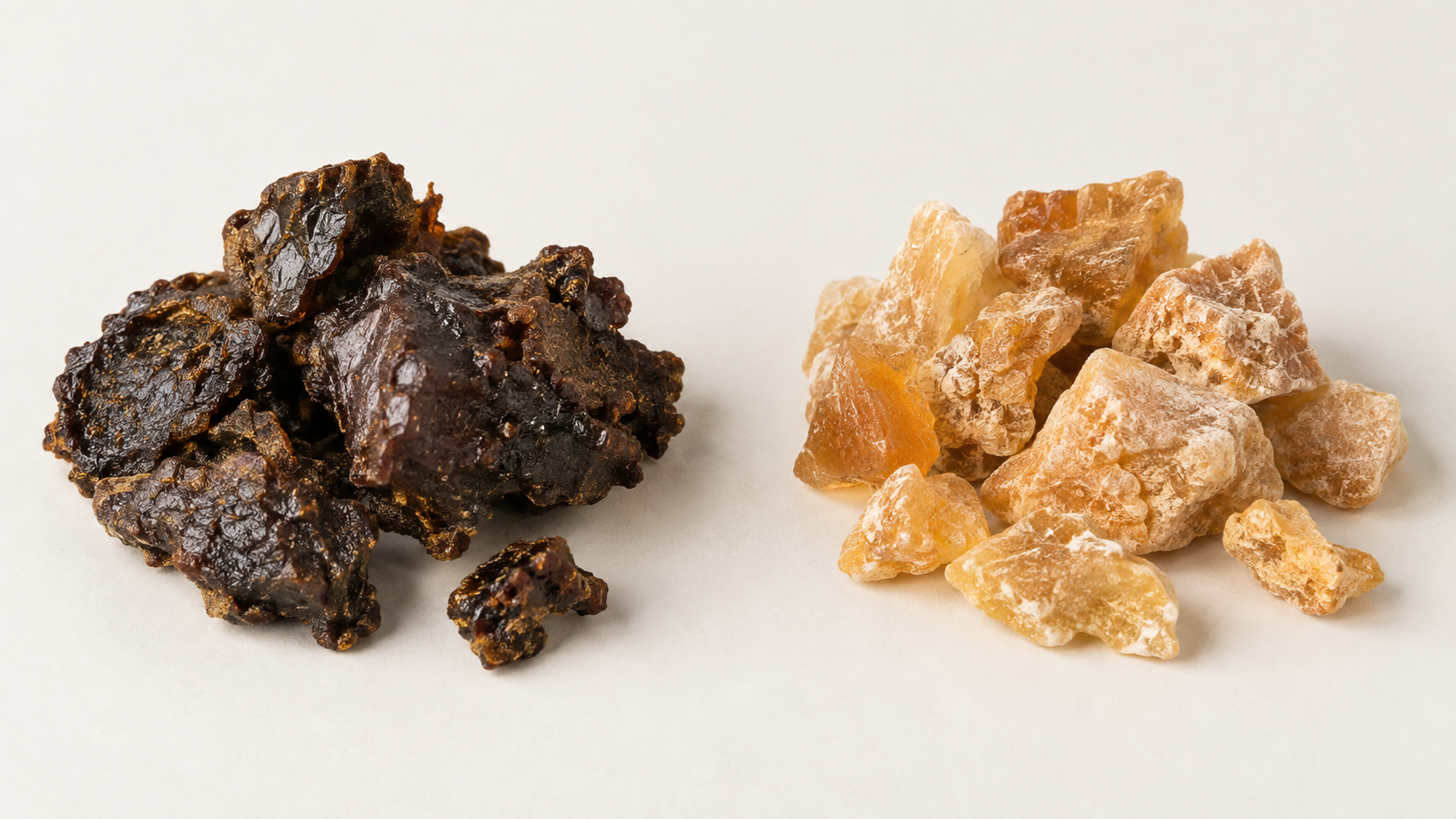
Labdanum and Benzoin resins used to create an Amber Accord
Labdanum and Benzoin contribute warmth and a balsamic character to many familiar Amber Accords.
Vanilla and Vanillin: Familiar Sweetness
The scent of Vanilla is familiar to most of us. In Amber, it can add a sweet, soft and slightly powdery quality. Vanilla extract and Vanillin, however, are not the same thing. Vanilla extract contains many components, while Vanillin is one specific aromatic molecule.
The type of sweetness depends on which material is used in the formula and how much of it is added. Simply increasing the amount of Vanilla does not automatically create a beautiful Amber. It still needs balance with resins, woods, spices or other notes.
Adding Musk, woods or spices also changes the character of Amber. Musk can make the fragrance softer and more musky. Spices add warmth and bite, while woody notes introduce dryness or depth. Floral notes can soften the entire composition.
This is why sweetness may be the first thing you notice in one Amber fragrance, while florals or spices appear first in another. Amber may sit behind the other notes and create a warm aura around them.
Has Amber Always Been Made in the Same Way?
Older fragrance formulas show that the idea of Amber has changed over time. Natural Ambergris infusions were once combined with floral extracts. Later, resins, Vanilla and different aroma chemicals made a much wider range of Amber compositions possible.
A 1996 technical article by chemist-perfumer Danute Pajaujis Anonis gives examples ranging from older Ambergris-based formulas to compositions using Labdanum, Benzoin, Vanilla and manufactured fragrance materials. This is why it is inaccurate to say that there is only one formula for “real Amber”.
Is Every Amber Sweet and Heavy?
Amber is known for warmth, but not every composition is equally dense or sweet. The difference becomes easier to understand when you notice which materials have been brought forward.
Soft and Sweet Amber
This style often gives greater emphasis to Vanilla-like sweetness, soft balsamic warmth and a powdery quality. It may suit you if you prefer a gentle blend over something very dry or intense. Whether the sweetness feels edible or gourmand still depends on the formula.
Spicy and Resinous Amber
In this style, resinous depth and warm spices are more prominent. Some compositions may feel slightly smoky, while others can suggest leather or dry wood. Sweetness may still be present, but it is not always the main feature.
Woody and Musky Amber
Some modern ambery materials place greater emphasis on dry woods and a musky effect. Ambroxan is a familiar fragrance material associated with this style. Chemistry references may also use names such as Ambroxide, but Ambroxan is the more familiar term in fragrance discussions. This molecule is connected to the olfactory world of natural Ambergris, yet it can be produced without collecting Ambergris directly from whales.
Firmenich describes AMBROX® SUPER as ambery, musky and woody. Its documentation also refers to the introduction of a biotechnology-based production process in 2016. This shows that the modern world of Amber extends beyond sweet resins.
These groups are simply a practical way to understand scent. A single fragrance may express more than one of these qualities at the same time.
Does an Amber Note Mean the Fragrance Contains Natural Ambergris?
No. Fragrance notes primarily describe what a perfume smells like. They do not reveal its complete ingredient list or the source of every material. A Vanilla note does not necessarily mean natural Vanilla extract is present, just as a Leather note does not mean real leather was used.
A practical example makes this distinction clearer. Firmenich's Benzoin Siam reconstitution document states that the material is made from a blend of natural extracts and synthetic molecules and contains no natural Benzoin. Yet its scent is designed to behave like Benzoin, with warm, Vanilla-like and balsamic qualities.
Creating the scent of a material is not the same as using that material itself.
Amber should be considered in the same way. If a product is described as “Natural Amber”, ask which material the claim refers to. Does it mean an extract of Labdanum or Benzoin, Ambergris, or a blend made with natural materials?
The word synthetic does not automatically mean poor quality. In the same way, the word natural does not prove that every claim about a product is true. The identity of the materials, the quality of the composition and the clarity of the seller's information all matter.
Ambergris alternatives are widely used in modern perfumery. However, it would also be inaccurate to make the universal claim that natural Ambergris is no longer used anywhere. Reliable information about a specific product is needed to know what it contains.
How Long Does Amber Attar Last?
The name Amber alone cannot give you an exact number of hours. The materials used, the complete formula and concentration, and the conditions of wear all affect the longevity of a finished fragrance.
Where do claims such as “lasts for one month” come from? Sometimes they come from documentation for an individual raw material. Firmenich's AMBROX® SUPER ingredient sheet mentions a persistence of one month on a smelling strip.
But a smelling strip is a paper strip used to evaluate fragrance, not human skin. This does not mean that an Amber attar will last for a month on your skin. A finished attar has its own formula, application amount and performance on skin.
Longevity and projection are not the same either. You may still smell a fragrance close to your skin after some time, even when it is no longer noticeable from a distance. When evaluating a sample, consider not only how long the scent remains, but also how strongly it projects and how it develops over time.
What Should You Check Before Choosing an Amber Attar in Bangladesh?
The Amber attar price in Bangladesh can vary considerably from one product to another. If two attars with similar names have different prices, begin by checking what type of product each one is. One may contain a particular natural extract, while another may recreate that type of scent. Formula, concentration, packaging and other costs can also affect the price. Price alone cannot identify the ingredients.
Make the question more specific by thinking about what you enjoy. Do you want a soft Amber with florals? Do you enjoy Musk with sweetness? Or are you looking for the depth of Oud, woods and spices? Choosing this way is easier than simply searching for a “good Amber”.
Before buying, consider asking:
Is this a finished attar intended for wearing, or a raw material used to make fragrance?
Is the scent mainly sweet, woody, spicy, or soft and floral?
If the product makes a natural claim, which specific material is being described as natural?
Can you evaluate the scent with a sample first?
If you return it, what conditions apply to the seal on the main bottle and the delivery charge?
If it is a finished attar suitable for skin, apply a small amount according to the maker's instructions and give it time. Notice the opening, the changes in the middle and the final dry-down separately. Do not assume that an unfamiliar raw material or concentrate is intended to be applied directly to skin.
A sample can help you understand your preference, but it cannot prove chemical purity.
For storage, keep the bottle tightly closed and away from direct sunlight and excessive heat.
AROWA's Amber Attars: Which One Is Right for You?
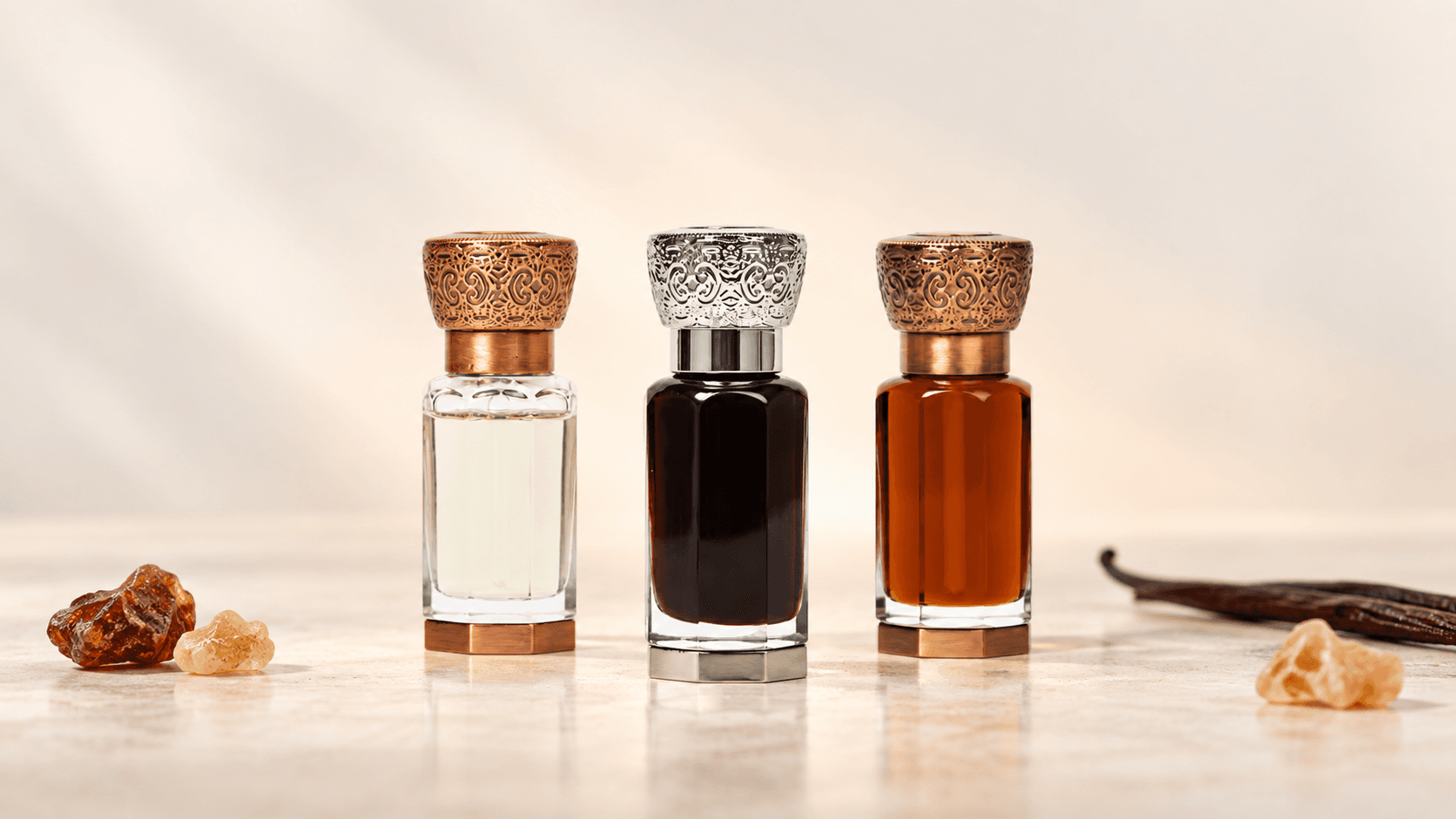
Combining Amber with Rose, Musk or Oud can bring different parts of the fragrance forward. These three AROWA attars offer a clear way to experience those differences.
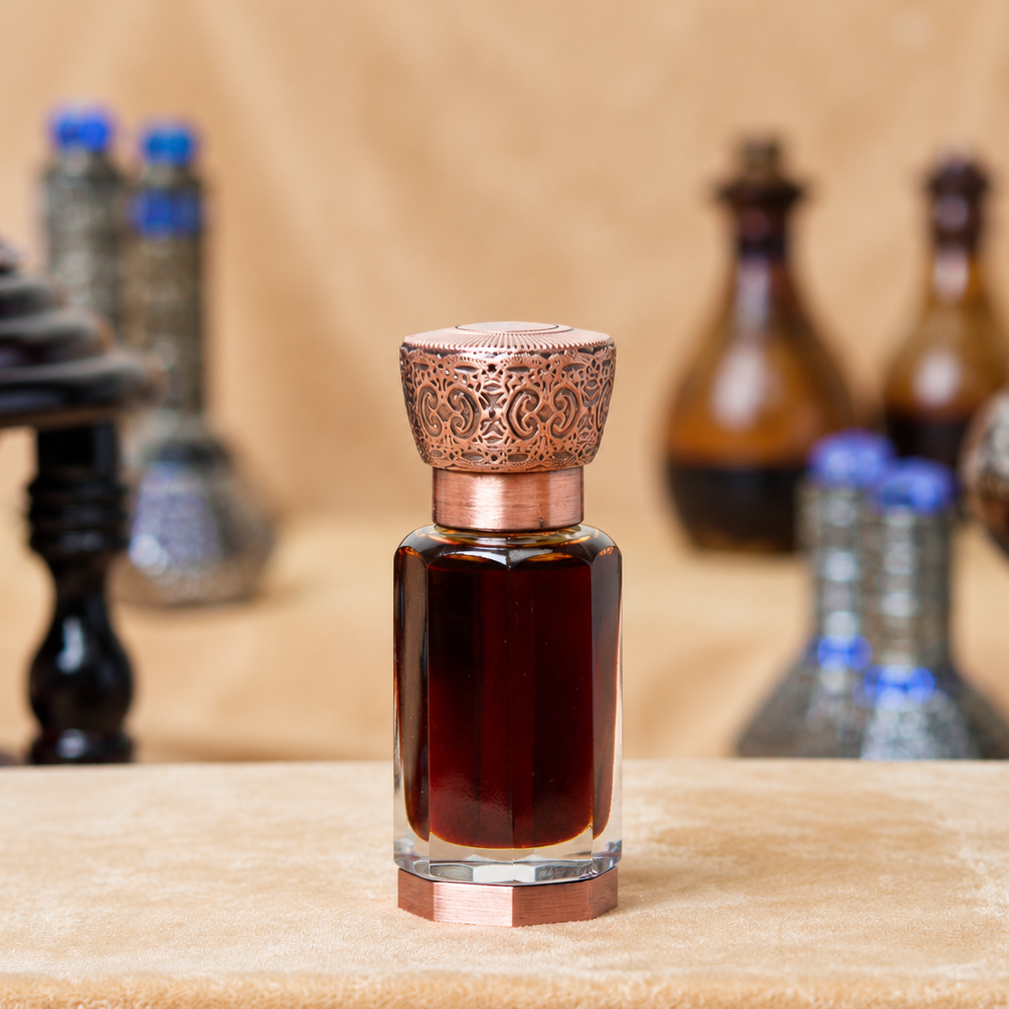
A bottle of AROWA Amber Oud attar
Amber Oud
If you want the depth of Oud with Amber's sweet warmth, consider Amber Oud. It opens with Warm Amber, Sweet Vanilla and Smoky Spice. The heart has balsamic, animalic and caramel-like qualities, followed by a dry-down of rich, earthy and woody Oud. It may appeal to those who enjoy dark woods and a smoky impression alongside soft sweetness. Learn more about Amber Oud.
Amber Rose
If you prefer warmth with a softer scent, consider Amber Rose. It opens with fresh florals, moves into the warmth of spice and wood, and settles into a sweet woody trail. It may suit those who enjoy the softness of rose but also want some spicy and woody depth. Learn more about Amber Rose.
Musk Amber
Many people also search for this type of fragrance as Musk E Amber. Musk Amber opens with Spice Complex, Mint and Saffron. Labdanum, Vanilla and Benzoin bring warmth to the heart, while Musk, Amber Resin and Leather shape the dry-down. Consider it if you enjoy a spicy opening with a sweet, musky and slightly animalic character. Learn more about Musk Amber.
These descriptions can give you an idea of each fragrance, but experiencing a sample will tell you more about which one you personally enjoy.
Common Questions About Amber
Final Thoughts
Amber does not guarantee one specific ingredient. It is a broad language of scent. In one composition, resinous warmth and Vanilla-like sweetness may come forward. In another, you may notice the softness of Musk or the depth of woods and spices.
Do not assume that an Amber label guarantees natural Ambergris, heavy sweetness or exceptional longevity. Ask what the product contains, give the sample time, and let your own nose make the final decision.