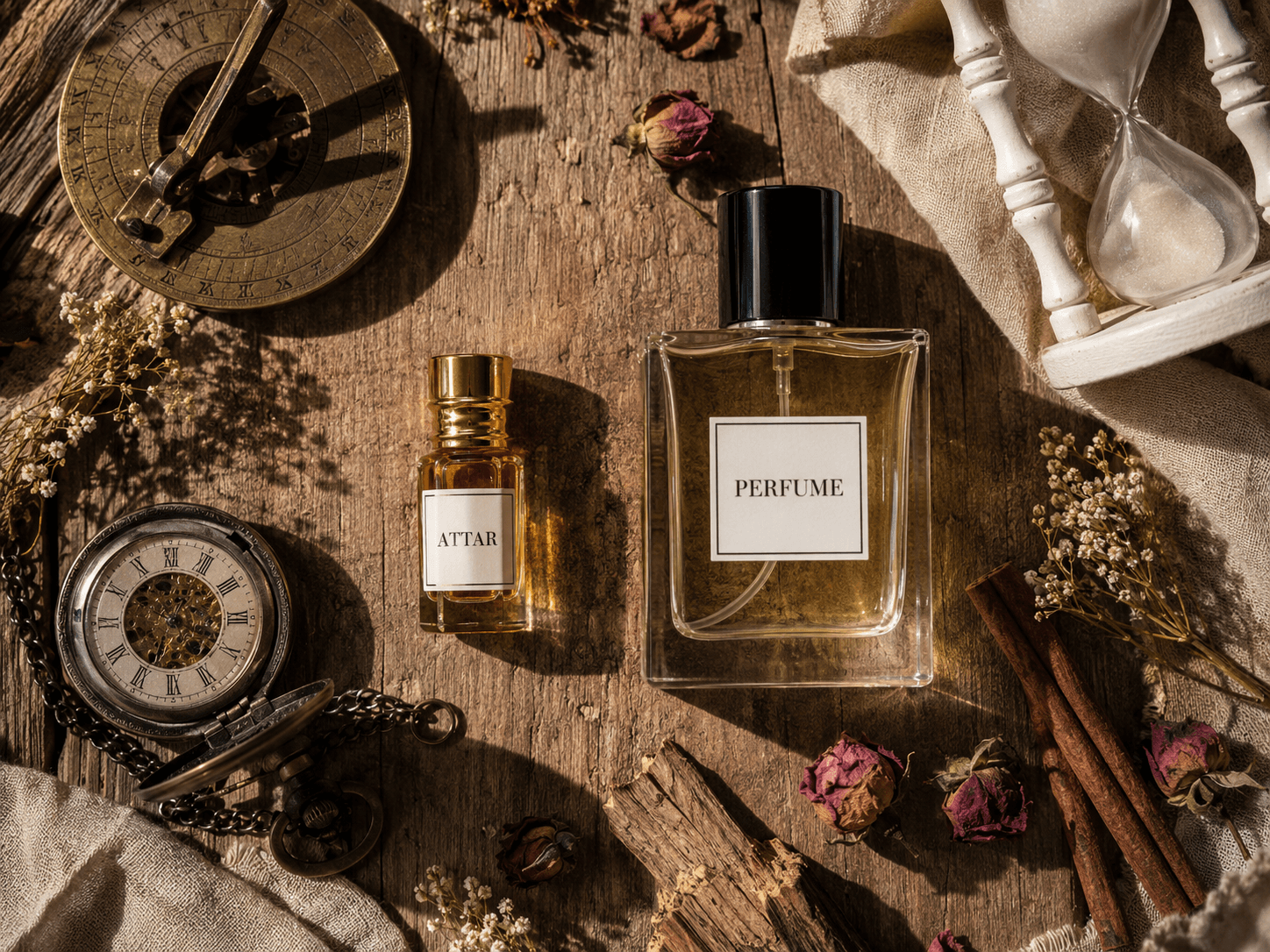
Perfume? That has alcohol in it! It's haram. Meanwhile, a lot of people also think attar isn't something for daily use in modern life, it's more of a special occasion thing, like for Jumu'ah or Eid.
The truth is, both sides only know half the picture, and they fill in the rest with assumptions.
So today, let's understand with an open mind what actually separates attar from perfume.
Attar
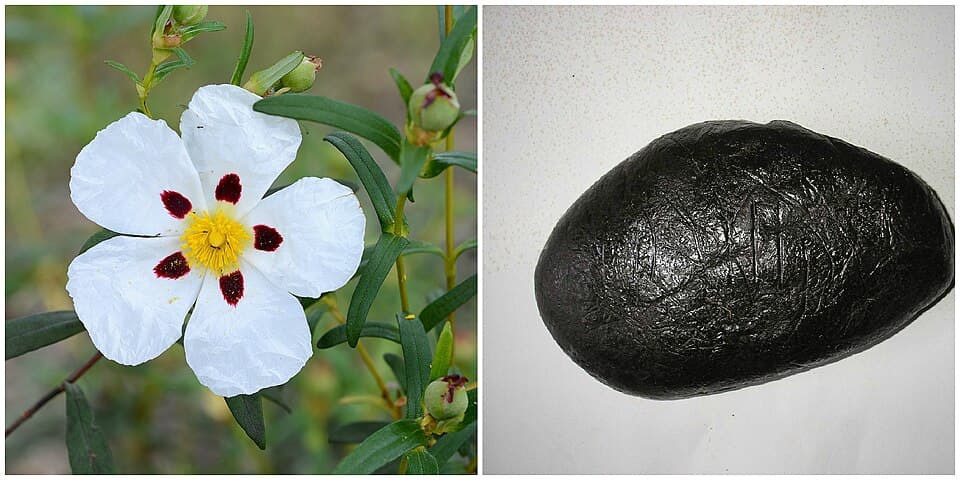
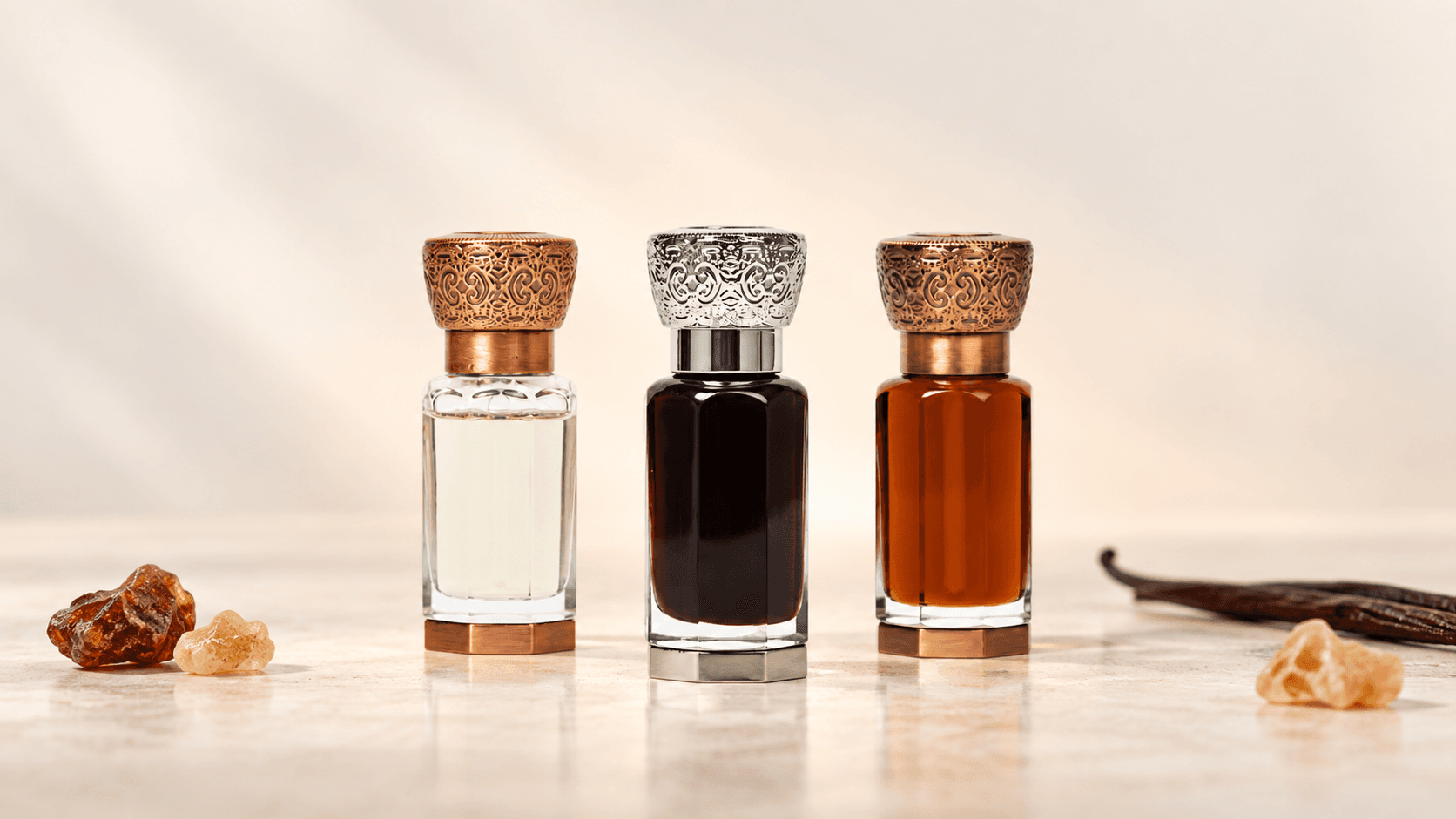
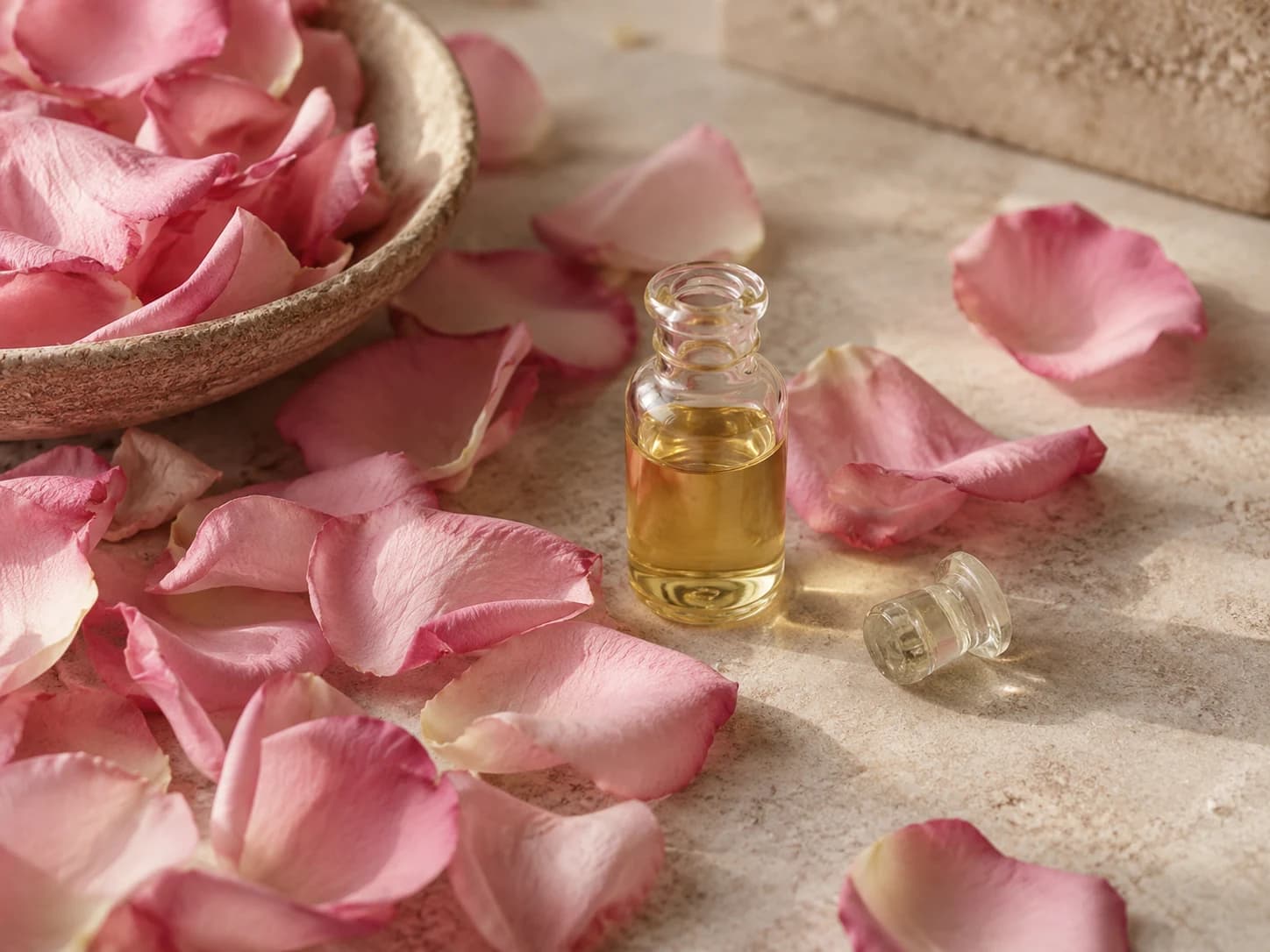
Attar is a type of oil that carries its own natural fragrance. It's made by combining one or more scented oils gathered from various natural sources. For instance, musk comes from deer musk glands, oud comes from woody sources, and fragrant oils are also collected from flowers, fruits, spices, and different herbs. Nature offers countless other sources too. So oils extracted from nature are called "natural perfume oil" in the fragrance world, and this is exactly where the core idea of attar comes from.
Modern Attar
You might be thinking, the attars available today that smell just like perfumes surely can't be completely natural!
You're right. If a fragrance house like Luzi wants to create a scent inspired by something as famous as Hawas Fire, they first analyze its fragrance profile. Then, through a specialized fragrance engineering process, they create an oil that closely resembles it. This is called "synthetic perfume oil." Now you probably understand how we manage to get such expensive smelling scents at a relatively lower price.
This thousand year old human love for fragrance still lives on through attar today. The ancient Egyptians were especially known for perfume making, and about 2400 years ago, the Greek historian Herodotus wrote about the Arab fragrance making craft.
Perfume
Perfume is a chemical blend of fragrance oil, alcohol, and distilled water mixed in a specific ratio. Here, the fragrance oil can be either natural or synthetic. The exact ratio of this blend controls the perfume's scent, longevity, and how far it spreads. A perfume's name mainly depends on how concentrated its fragrance oil is. Higher concentration is called Parfum or Extrait (around 20 to 30 percent), which is expensive but lasts all day with just one application. Next comes Eau de Parfum (EDP), with concentration around 15 to 20 percent. This is the most popular one, since it offers a good balance between price and lasting power. And the lightest is Eau de Toilette (EDT), with concentration around 5 to 15 percent. This is usually best suited for daily or office use, since its scent is light and comfortable.
The journey of modern alcohol based perfume began in 1370, when "Hungary Water," the world's first known alcohol based perfume, was created.
Why alcohol and distilled water are used:
Fragrance oil doesn't blend into the air easily on its own, it's thick and heavy. Adding alcohol thins out the oil and lets it evaporate quickly, which is what makes the scent spread through the air. If you used oil alone without alcohol, it would basically end up behaving like attar, where you need to bring your nose close to actually catch the scent.
Applying pure alcohol (100 percent ethanol) directly on skin can cause dryness or irritation. That's why perfumes use distilled water, so the alcohol level stays controlled and the mixture ends up being gentler on the skin. Since distilled water is completely pure and odorless, it also helps maintain the perfume's quality, stability, and the purity of its fragrance.
The Real Takeaway
When a fragrance's scent touches you, the feeling it creates in your mind, that's the real takeaway. This scent can shift your mood, make you feel more confident, and leave behind a lasting touch of charm in your memory that doesn't fade easily. Price, trends, branding, and packaging are all just secondary things.
A scent that captivates you today might not feel the same as your experience and time go on, your perspective toward it can change. Taste and preference shift with time. Also, the same perfume doesn't smell the same on everyone. Weather, body chemistry, even eating habits, all affect how a scent comes through. On top of that, understanding a fragrance's notes (top, middle, and base) matters too, because a scent's smell changes in stages over time, and without knowing this shift, it becomes hard to get the right experience out of it.
A Fair Rivalry
Now you know that attar and perfume differ hugely when it comes to ingredients, sources, and how they're made, which is why comparing them purely on effectiveness doesn't really make sense.
Advice From The Experts
Ajmal, the world's leading perfume manufacturing company. In the words of their CEO Abdulla Ajmal, "The quality of a perfume or attar doesn't depend on how long it lasts, how far it spreads, or how much longer it stays if applied to a certain part of the body." What actually makes a good fragrance good is the effect it has on your feelings. Beyond that, all these rules and regulations aren't fixed truths, they're just personal theories that differ from person to person. The more fragrance you apply, the more its presence will show, in that same proportion, simple math.
The Therapeutic Importance of Attar
The difference between attar and perfume isn't just about scent, their effect on the human body is clear too. Attar is made from plants or natural sources, and these contain proven bioactive compounds that help calm the mind or reduce stress. In other words, alongside the fragrance, it also works on the body. Perfume can't do this, because its ingredients are made purely to hold onto a scent, not to have any effect on the body.
So essentially, alcohol spreads fast, while attar's oil concentration settles into memory and affects the body.
Take Ruh Khus attar for example, it creates a cool, deeply calm, almost serene feeling.
Is Perfume Always Haram? Which One Should We Actually Use?
According to knowledgeable scholars, most of the alcohol used in medicines, fragrances, and other cosmetics doesn't come from grapes or dates, it's typically made from grains, husks, or mineral sources. Since there's no proven connection to the source of alcoholic drinks, it isn't considered haram. That said, we're not saying you should go ahead and use perfume either.
Because as Muslims, our one and only role model to follow is our beloved Prophet Muhammad ﷺ, who mentioned fragrance as one of the most beloved things in this world, and named Kasturi/Musk as the finest of all scents. So for us, attar isn't just a pleasant smell, it's tied to purity, to Muslim culture, and to faith. It's a sunnah.
The Arowa team is working tirelessly to spread accurate knowledge about the world of attar, drawing on our hands on experience and a commitment to keeping our customers informed. If you have any thoughts or questions that matter to you, feel free to let us know. And do take a look through Arwa's collection, only buy what genuinely fits your needs and earns your trust.