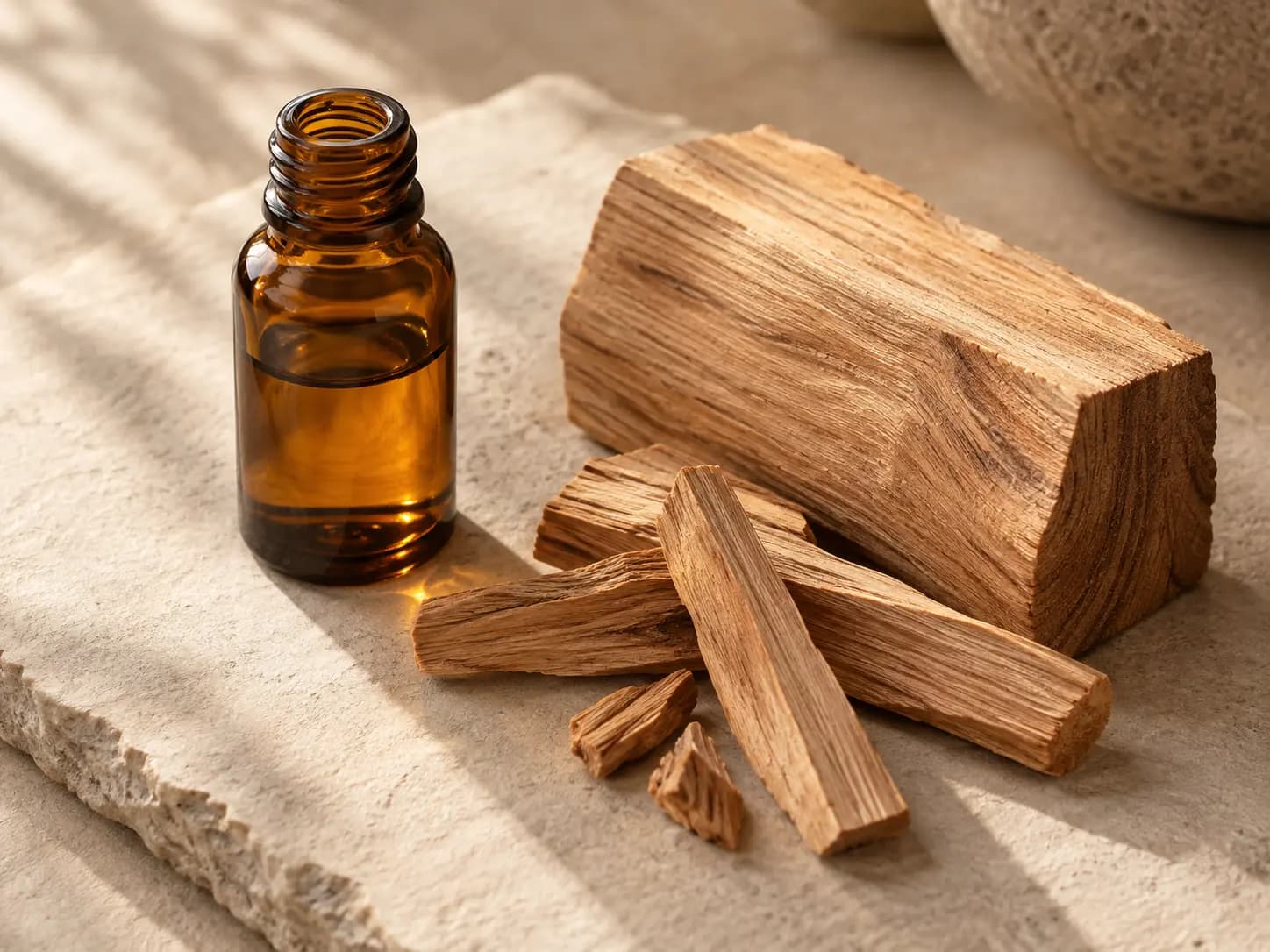
Sandalwood Oil is a natural aromatic oil distilled from the fragrant heartwood and roots of the sandalwood tree. Compared with the smell of ordinary wood, it is much softer, warmer and creamier, with a gentle sweetness. Sandalwood is valued not only for its own distinctive aroma, but also for the way it helps other perfume materials feel smoother and more connected.
Producing good Sandalwood Oil, however, takes time. A sandalwood tree needs decades to develop fragrant heartwood, and even then only a small amount of oil can be obtained from the wood. Long cultivation periods, pressure on wild sandalwood and limited supply have all pushed its value higher. The situation is striking enough that India, a country closely associated with Mysore sandalwood, imported 21,750 kg of sandalwood oil in the 2024–25 financial year.
And not every Sandalwood Oil is the same. Species, origin, extraction method and purity can all change both the scent and the quality.
What Is Sandalwood Oil and How Is It Made?
Sandalwood Oil is not an ordinary vegetable oil or a liquid sap taken from the tree. As a sandalwood tree matures, aromatic compounds build up inside its heartwood. The concentrated oil containing those compounds is what we know as Sandalwood Oil. Two compounds in particular, alpha-santalol and beta-santalol, play an important role in its characteristic aroma.
The younger outer sapwood contains far less fragrant oil. That is why producers mainly use the heartwood, the lower part of the trunk and the roots. The material is cut into small pieces or ground, then distilled with steam. The hot steam carries volatile aromatic compounds out of the wood. Once the vapour cools back into liquid, the oil can be separated from the water.
The best-known species in perfumery is Santalum album, commonly called Indian Sandalwood or White Sandalwood. Oils are also produced from other sandalwood species, and the scent changes from one species to another.
Sandalwood Grows with the Help of Other Plants
Sandalwood is a hemiparasitic plant. It can make its own food through photosynthesis, but its roots also form special connections with nearby plants to draw water and mineral nutrients. The plant it connects to is called a host plant.
So growing sandalwood is not simply a matter of planting a sandalwood seedling and waiting. Suitable host plants also have to be managed, and those needs can change as the sandalwood tree grows.
How Long Do You Have to Wait for Sandalwood?
With sandalwood, the timeline is measured in decades rather than years. In commercial cultivation, trees are often harvested after around 15 to 20 years. For more mature heartwood with a higher oil content, the wait may be 25 to 30 years, sometimes longer.
Age alone does not decide the quality of the wood. Species, soil, climate, host plants and the amount of heartwood all matter.
Sandalwood is also not a crop that can be harvested from the same tree every year. Valuable oil is found in the lower trunk and roots as well, so the whole tree is usually removed during harvest. Once that tree is gone, a new one must be planted and the long wait begins again.
How Is the Oil Extracted from the Wood?
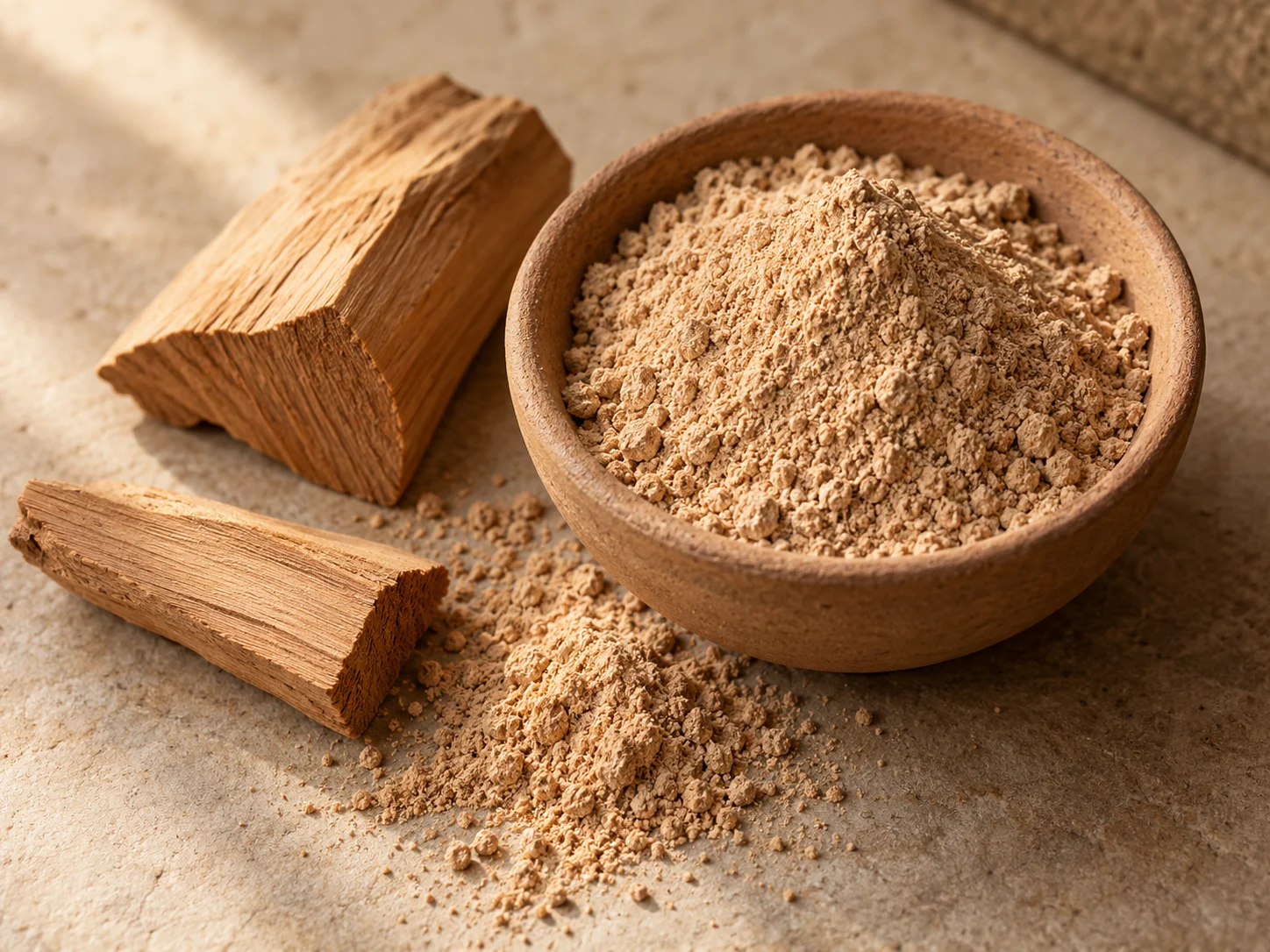
Steam distillation process used to extract sandalwood oil from heartwood
After the fragrant wood and roots are cleaned and sorted, they are cut into smaller pieces or ground. The material then goes through steam distillation.
Steam passes through the wood and carries aromatic compounds with it. The vapour is cooled back into liquid, after which the oil and water are separated. The quality of the raw wood matters, but so do the duration and control of the distillation.
Inside the wood, aromatic compounds are spread through a much larger structure of non-aromatic material. Distillation concentrates those fragrant components. That is why Sandalwood Oil can reveal aspects of the scent more clearly than simply smelling a piece of sandalwood.
Are All Sandalwood Oils the Same?
No. Sandalwood Oil may sound like the name of one specific scent, but oils are produced from several sandalwood species. The comparison most often made is between Santalum album and Santalum spicatum. They differ not only in origin, but also in species, chemical composition and scent profile.
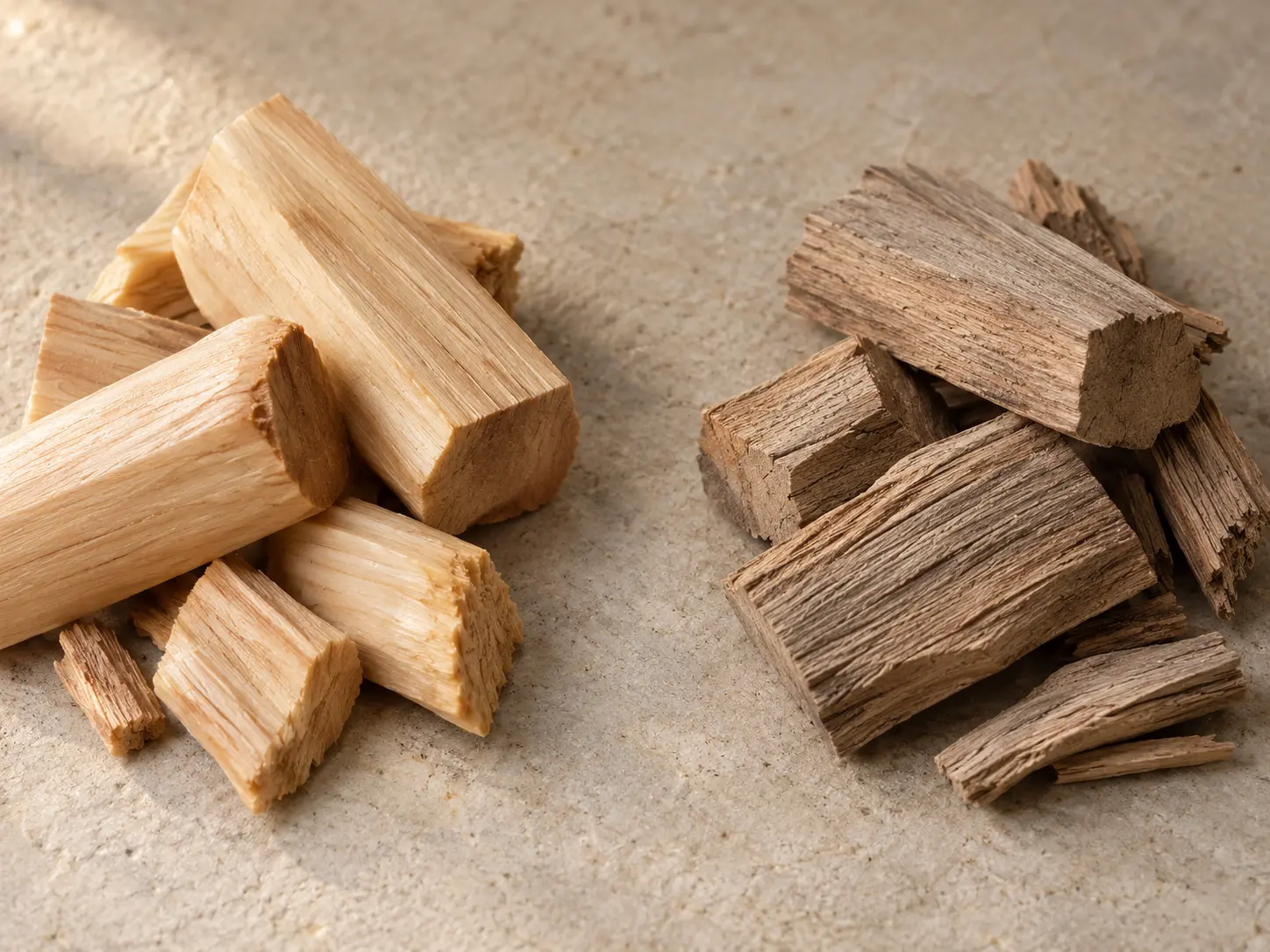
Comparison of Santalum album and Santalum spicatum sandalwood
Visual comparison of Santalum album and Santalum spicatum.
Subject | Indian Sandalwood | Australian Sandalwood |
|---|---|---|
Scientific name | Santalum album | Santalum spicatum |
Scent profile | Creamy, smooth, woody and gently sweet | Relatively drier wood with green and herbal nuances |
Santalol | Under ISO 3518:2025, Z-alpha-santalol 41–55% and Z-beta-santalol 16–24% | Usually lower in santalol and should be assessed against standards appropriate to the species |
Price position | Often more expensive, especially when the claimed Mysore origin is verified | Often comparatively less expensive |
“Australian-grown” tells you where the sandalwood was grown, not which sandalwood species it is.
Both Santalum spicatum and Santalum album are grown in Australia. If you want to know the species, check the botanical name. The santalol limits shown in the table apply specifically to pure Santalum album oil.
Why Is Mysore Sandalwood So Well Known?
Sandalwood from Mysore in Karnataka, India, has been highly valued in perfumery for generations. That reputation is where the name Mysore Sandalwood comes from.
But Mysore is not a separate sandalwood species. The name refers to a region and its long association with sandalwood.
A bottle labelled “Mysore” does not, by itself, prove the true origin of the oil. Where the tree was grown and which botanical species was used are two separate facts, and both are worth checking.
The same principle applies to sandalwood from Australia. Alongside its native Santalum spicatum, Australia also cultivates Santalum album.
“Australian-grown” tells you the place of cultivation, not the botanical species.
Even oils from the same species can smell different. Tree age, the part of the wood used, raw material selection and distillation choices can all leave their own mark. Country of origin alone is not enough to judge quality.
What Does Sandalwood Oil Actually Smell Like?
The word creamy comes up again and again when people describe sandalwood. It does not mean the oil contains milk or cream. It describes the soft, almost milky or buttery impression that can appear inside the woody scent.
This quality is especially associated with Santalum album. Alongside it, you may notice warm wood and a gentle sweetness. Some oils have a slightly earthy feel, while others show faint smoky or resinous nuances. Alpha-santalol and beta-santalol are important contributors to this characteristic scent.
The sweetness of sandalwood is not as direct as vanilla or caramel. It sits inside the wood itself. That is why sandalwood can feel soft and sweet without becoming a simply “sweet” fragrance.
How Does It Change on Skin?
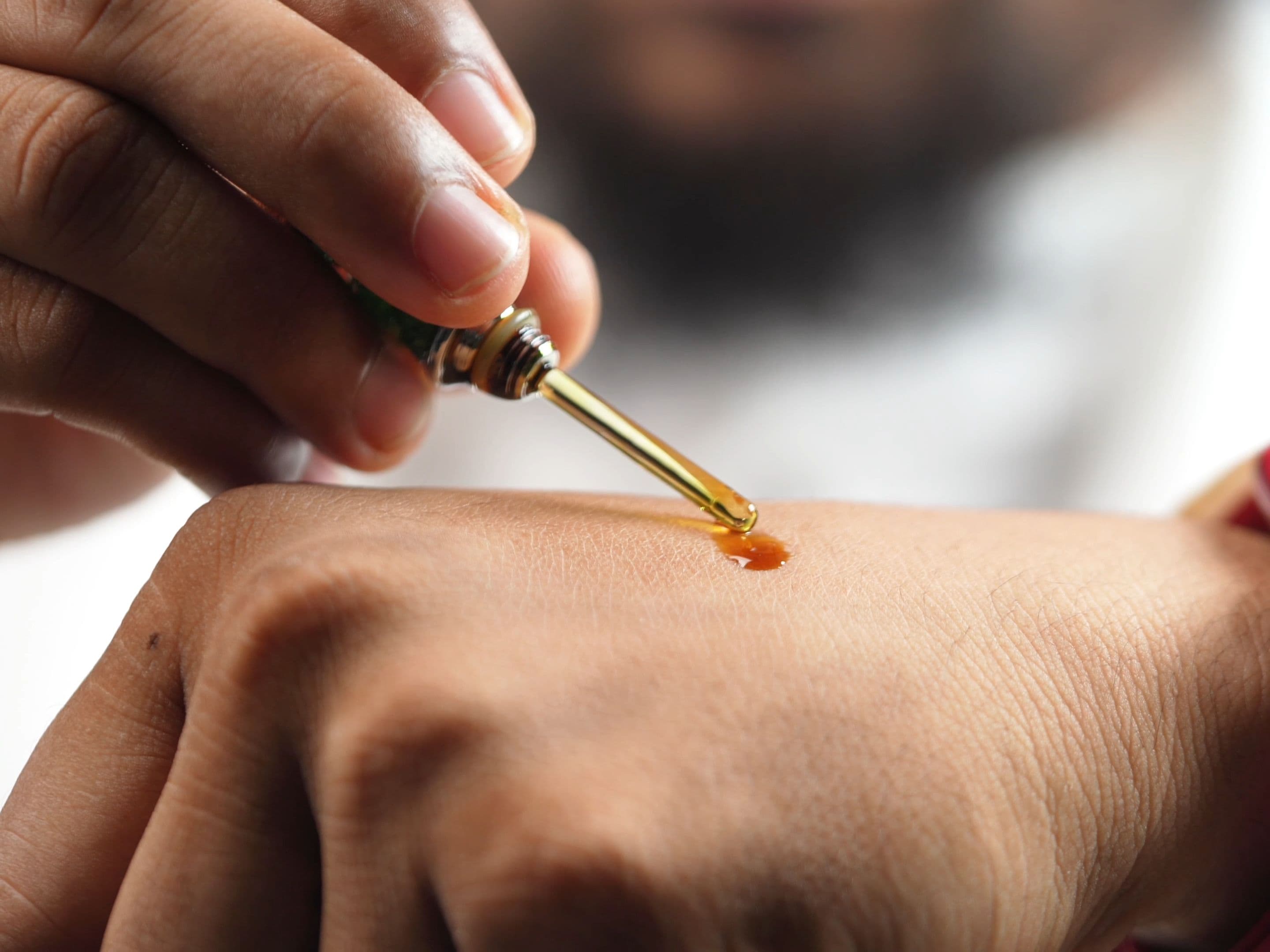
In a sandalwood attar made for skin use, the woody side may be more noticeable at first. Give it some time and the creamy softness or gentle sweetness can become easier to notice. The final stage, known as the drydown, often becomes quieter and sits closer to the skin.
Not every sandalwood oil will unfold in exactly the same way. Your skin, how much you apply and the other ingredients in the attar can all change the experience.
If your idea of sandalwood comes mainly from sandalwood soap or incense, smelling distilled oil may surprise you. Soap contains other fragrance materials, while incense also includes the smell created by burning.
Is Older Sandalwood Oil Always Better?
Some sandalwood oils may feel smoother after they have rested for a while. But age alone is not proof of quality.
Good raw material, careful distillation and proper storage still matter. An old bottle does not automatically mean the oil inside is better.
What Does Sandalwood Oil Do in Attar and Perfumery?
Sandalwood is a classic base note. Many of its aromatic components evaporate relatively slowly, so its presence can remain after lighter notes begin to fade.
That does not mean a base note appears only at the end. Sandalwood is part of the fragrance from the beginning. It simply becomes easier to notice as brighter materials lose intensity.
When sandalwood is described as a fixative, the idea is that it can help provide a lasting foundation for a composition. Its smooth woody scent can also soften the way flowers, spices or musks sit together.
Imagine an attar with a bright rose note. A soft sandalwood base can place warm wood beneath that rose and make the transition between the two feel more balanced. Creating that balance is part of the perfumer’s job.
Adding sandalwood does not automatically make every other note last longer in exactly the same way.
Sandalwood as a Carrier
In some traditional attars, sandalwood oil is used as the base that receives other aromatic materials. In that sense, it can be described as a carrier.
But sandalwood is not an odourless carrier. It adds its own fragrance to the composition.
It should not be confused with jojoba or other common carrier oils used to dilute essential oils for skin application. Sandalwood Oil is itself a concentrated aromatic material.
Why Is Sandalwood Oil Used in Maceration?
When an aromatic material is left to soak in oil, some of its oil-soluble components gradually move into that oil. This method of extracting aroma by soaking is called maceration. If sandalwood oil is used, its own woody scent becomes part of the result as well.
How long the process takes depends on the material, its condition and the amount being used. Some sharp or separate elements in a fresh mixture may feel smoother after resting. But leaving a blend for a long time does not guarantee that it will always become better.
In modern perfumery, people sometimes also use the word maceration for resting a finished fragrance. The distinction matters. Extracting aroma by soaking a raw material and resting an already finished blend are not the same process.
The Role of Sandalwood in Musk Sultan
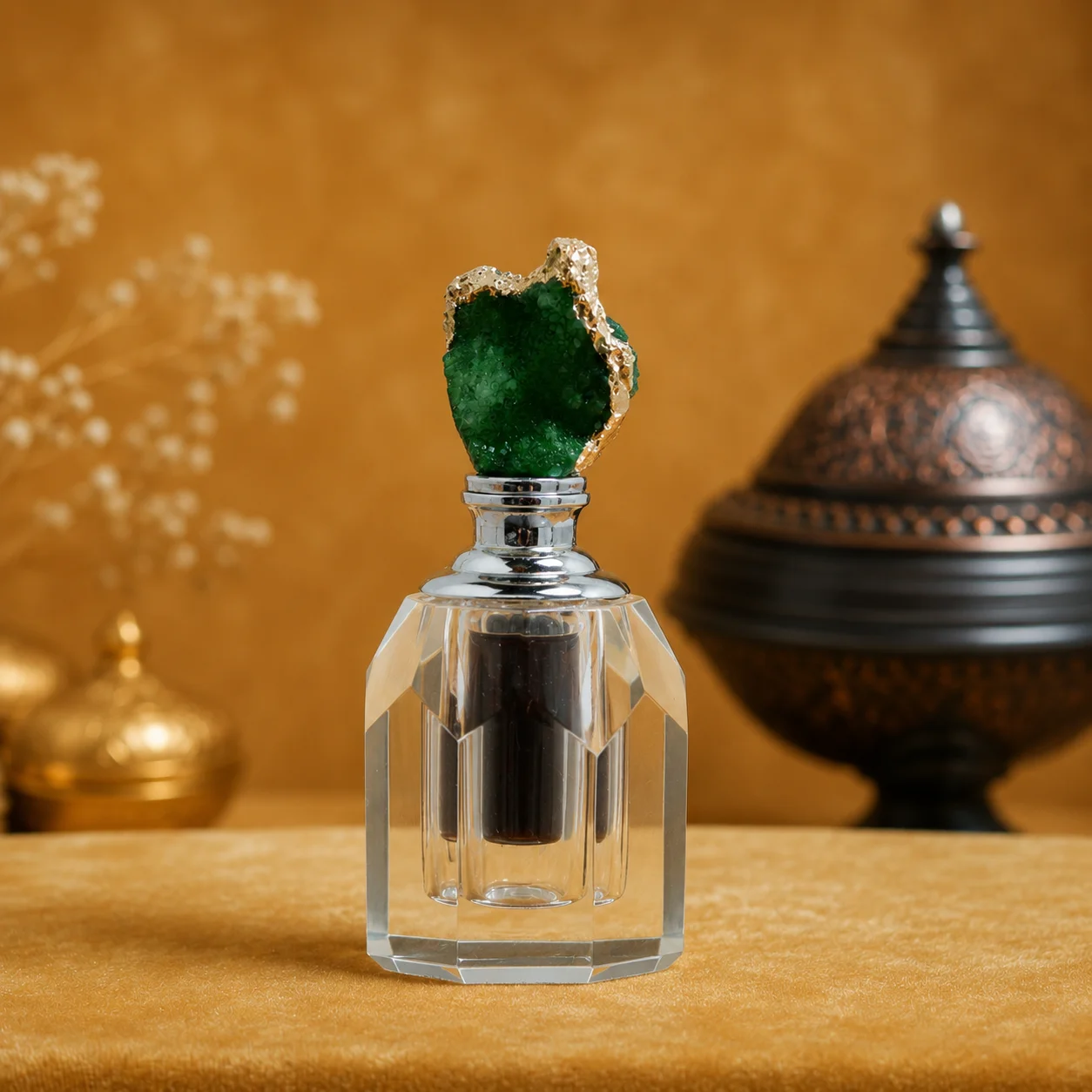
AROWA Musk Sultan attar bottle
AROWA’s Musk Sultan ↗ contains a long maceration of musk and sandalwood. At first, you may notice an earthy depth with a slight leathery character. As it settles, sandalwood’s softer woody side becomes more noticeable and the intensity feels smoother.
Here, sandalwood is not simply a background note. It helps shape the overall texture of the fragrance.
What About Rose and Saffron?
There is a tradition of soaking aromatic materials such as saffron in sandalwood oil to draw out their scent. But the presence of Rose or Saffron with sandalwood does not automatically mean an attar was made by soaking those materials directly in oil.
In the traditional Deg-Bhapka process, aromatic vapour from flowers travels into a receiving vessel containing sandalwood oil. The flower aroma is gradually absorbed into the sandalwood. This is different from leaving raw petals to soak in oil.
If finished Rose Oil and Sandalwood Oil are simply mixed together, that is blending.
The ingredient names may look similar on paper, while the production method can be completely different.
From Royal Tree to Supply Pressure: The History of Sandalwood
In 1792, Tipu Sultan, the ruler of Mysore, declared sandalwood a royal tree. In the years that followed, sandalwood in southern India remained under strict government control for a long time.
Under these systems, even when a tree grew on private land, the landowner’s freedom to use or sell it could be limited. At the same time, protecting the tree and dealing with the consequences of theft could become the owner’s responsibility. For many farmers, sandalwood represented potential profit but also considerable risk.
High prices and strong demand also encouraged illegal trade. The sandalwood smuggling associated with Veerappan became one of the most widely known chapters of that underground market. Overharvesting, theft and insufficient replanting together placed pressure on wild sandalwood populations.
In the IUCN assessment published in 2019, Santalum album was classified as Vulnerable, a category indicating a risk of extinction in the wild.
How Did the Supply Map Change?
India took steps to expand opportunities for private sandalwood cultivation. At the same time, plantations of Santalum album were established in Australia. Indian Sandalwood oil therefore began to come from countries outside India as well.
India itself also imports sandalwood oil. According to data published by ICFRE-IWST, imports reached 21,750 kg in the 2024–25 financial year.
That does not mean sandalwood production in India has disappeared. It shows that even a traditional producing country can depend on overseas supply to meet domestic demand.
New plantations can be established, but the time required to grow mature, fragrant heartwood cannot simply be accelerated.
Which Notes Blend Well with Sandalwood?
Sandalwood’s smoothness works in soft everyday attars as well as darker, spicier fragrances. What it smells like in the final composition depends on which notes are paired with it and how much of each is used.
Sandalwood + Musk: The soft woodiness of sandalwood meets the warmth of musk. White Musk can keep the result softer, while a darker animalic-style Musk can add depth.
Sandalwood + Rose: Sandalwood gives Rose a smooth woody base, so floral brightness and warm wood can sit together.
Sandalwood + Oud: Sandalwood can soften and balance Oud’s resinous or smoky side.
Sandalwood + Amber: This pairing often feels warm with a gentle sweetness. The result changes depending on how the Amber accord itself is built.
Sandalwood + Saffron: Saffron’s dry spicy character can sit against sandalwood’s smoothness. Some blends may also reveal a leathery nuance.
Sandalwood + Vanilla: Vanilla can make sandalwood’s creamy impression feel even more pronounced.
These are general ways to understand the combinations. Two attars can list the same pair of notes and still smell very different.
To understand how sandalwood differs from Oud, read What Is Oud and Why Is It So Valuable? ↗.
Why Is Natural Sandalwood Oil So Expensive?
If you look only at the oil inside the bottle, you miss much of what makes sandalwood expensive. The real cost begins years earlier, with cultivation, care, protection, harvesting and distillation.
The full weight of the wood does not become oil. Distillation typically yields only a few percent of oil from fragrant heartwood, and the exact yield changes with wood quality and processing. Producing a small quantity of oil therefore requires a much larger amount of valuable wood.
Several factors directly affect the price:
Long cultivation period: Land, maintenance and host-plant management have to be supported for many years.
Tree security: Protecting valuable sandalwood is itself part of the cost of cultivation.
Amount of fragrant heartwood: Not every tree develops the same amount of heartwood or the same oil content.
Distillation and quality testing: Fuel, equipment, time and skilled workers are required.
Origin and supply: Verified oil from a particular region, or claims involving limited older stock, can carry a different price.
Why Do Different Types of Sandalwood Cost Different Amounts?
Product type | General price tendency | What to remember when comparing |
|---|---|---|
Verified Mysore-origin Santalum album | Usually more expensive | Origin, wood quality and claims about older stock should be verified |
Plantation-grown Santalum album from Australia | Often less expensive than verified Mysore-origin oil | The species may be the same, but every batch is not identical |
Australian Santalum spicatum | Usually less expensive than Santalum album | It is a different species with a different scent profile |
Synthetic sandalwood materials or accords | Often possible to produce at lower cost | A single molecule, a finished accord and a retail attar cannot be compared on price in the same way |
This is a general comparison, not a list of fixed market prices. The wholesale price of raw material by the kilogram and the retail price of a small bottle of finished attar should not be compared directly either.
If you see “100% Pure Sandalwood Oil” at a very low price, ask what the product actually is. Is it naturally distilled oil, a diluted blend or a fragrance oil made to smell like sandalwood?
A low price alone does not prove adulteration, and a high price does not guarantee purity.
What Should You Check Before Buying Sandalwood Oil?
Start by deciding what you actually want. Are you looking for natural Sandalwood Essential Oil, or a ready-to-wear attar built around the scent of sandalwood? The two products serve different purposes and should not be judged by the same expectations.
Check the product description for the following:
Botanical name: Which sandalwood species was used?
Product type: Is it natural oil, synthetic fragrance, a blend or diluted oil?
Origin: Where was the tree grown, and where was the oil produced?
Extraction method: Is it steam-distilled oil, another type of extract or a fragrance blend?
Dilution information: If another carrier has been added, is that clearly stated?
Batch and test information: For an expensive raw material, is a report or Certificate of Analysis available?
What Should You Look for in a Report?
For pure Santalum album oil, the santalol profile is important. Under ISO 3518:2025, Z-alpha-santalol is specified at 41–55% and Z-beta-santalol at 16–24%.
But matching those two numbers does not complete the entire assessment. The full chemical profile, along with properties such as density and refractive index, can also be part of quality evaluation. It is also worth checking whether the report’s batch number matches the product and which analytical method was used.
Do not treat the santalol percentage as the oil’s “purity percentage.” And do not apply raw-material specifications directly to a finished attar blend.
How Much Can Your Nose and Eyes Tell You?
A sweet scent, dark colour or thick texture cannot confirm whether sandalwood oil is genuine. Natural sandalwood itself varies, and synthetic materials can also create a smooth sandalwood impression.
Smelling a fragrance can tell you whether you like it. Confirming the purity of an oil is a different job.
If something smells unusual, ask questions. But do not treat a single home test as final proof. If possible, trying a small amount or sample first is far more useful for understanding your own preference.
AROWA’s Mysore Sandal
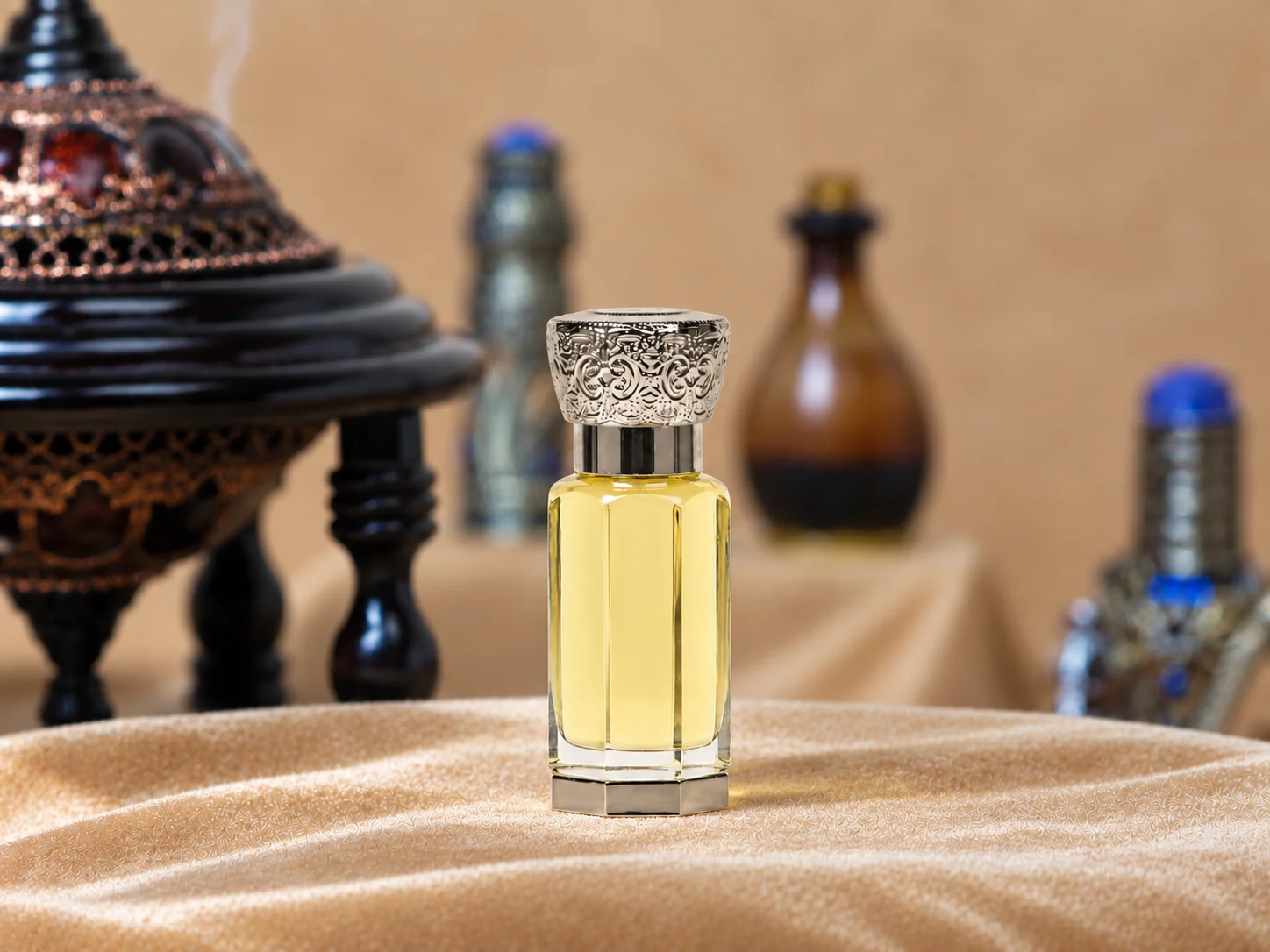
AROWA Mysore Sandal attar bottle
If you want a fragrance that keeps sandalwood itself at the centre, you can explore AROWA’s Mysore Sandal. Its description combines warm wood with creamy softness, gentle sweetness and a slight earthy nuance.
Do not judge it only by the first few seconds. Give the fragrance some time and notice what appears after the opening settles.
For more practical buying guidance, read How to Choose a Good Attar ↗.